Inorganic Gemstones

Aquamarine

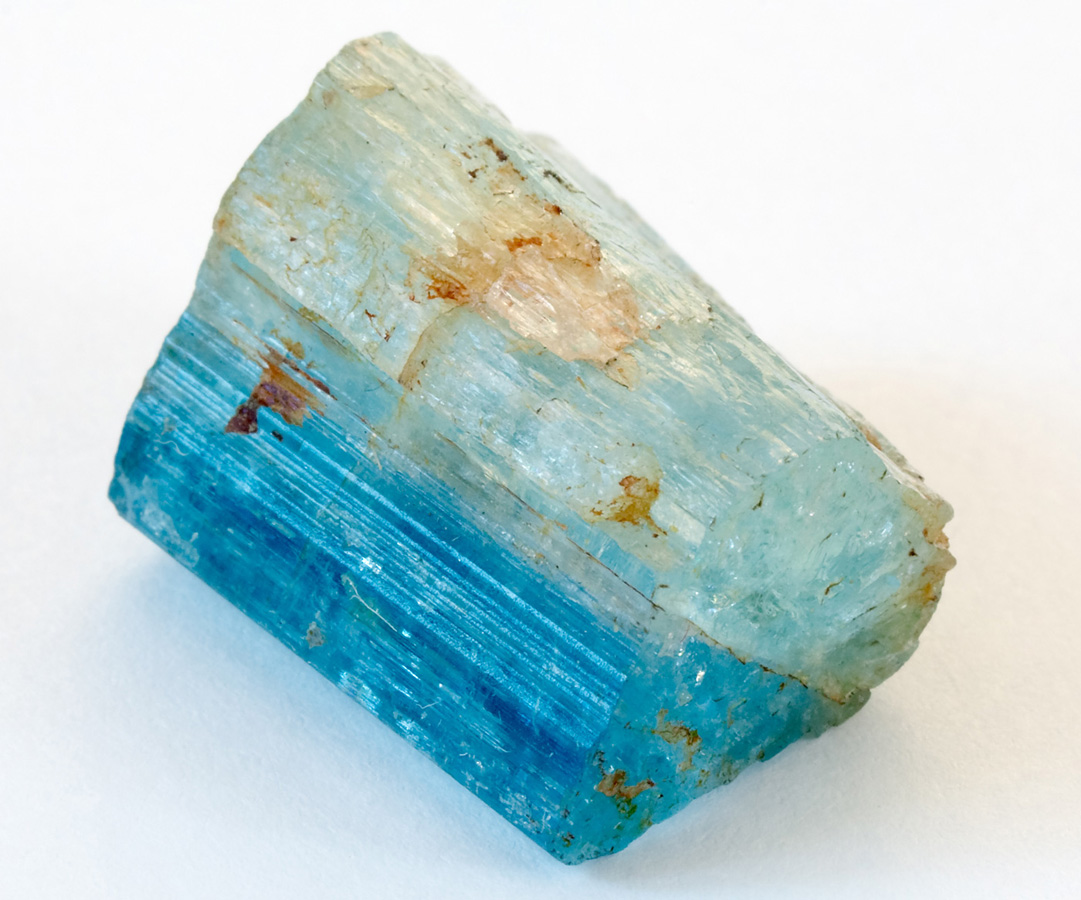
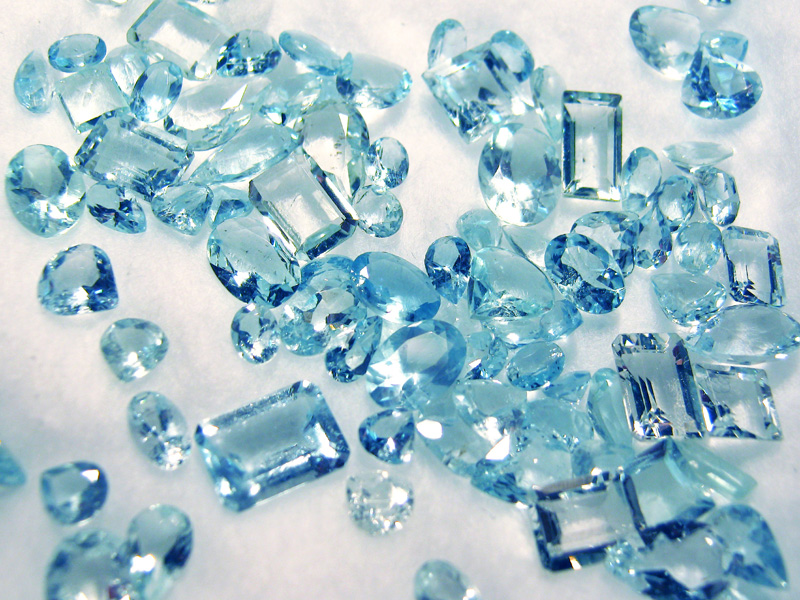
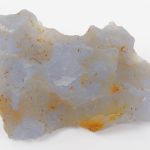
Rough Aquamarine

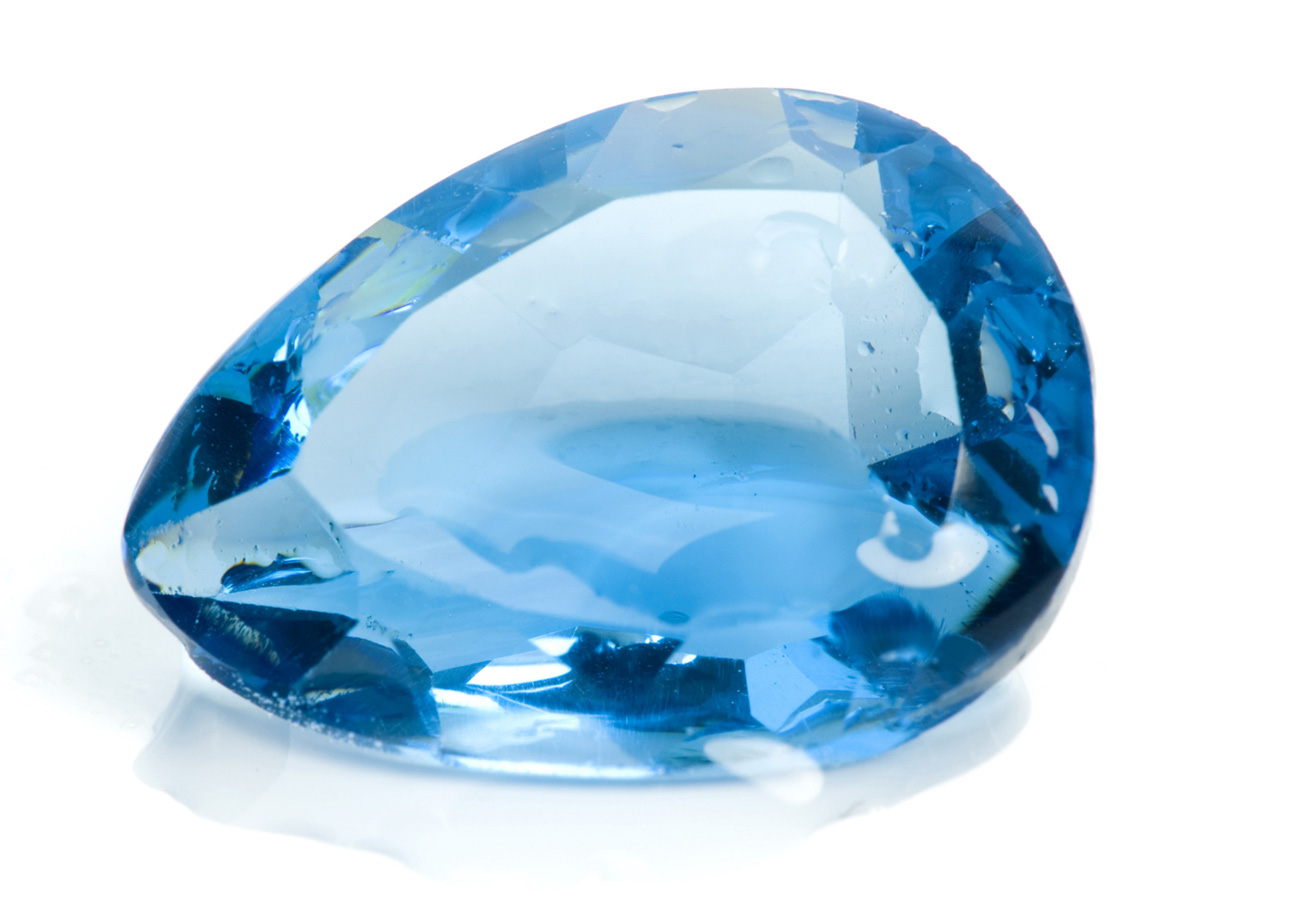
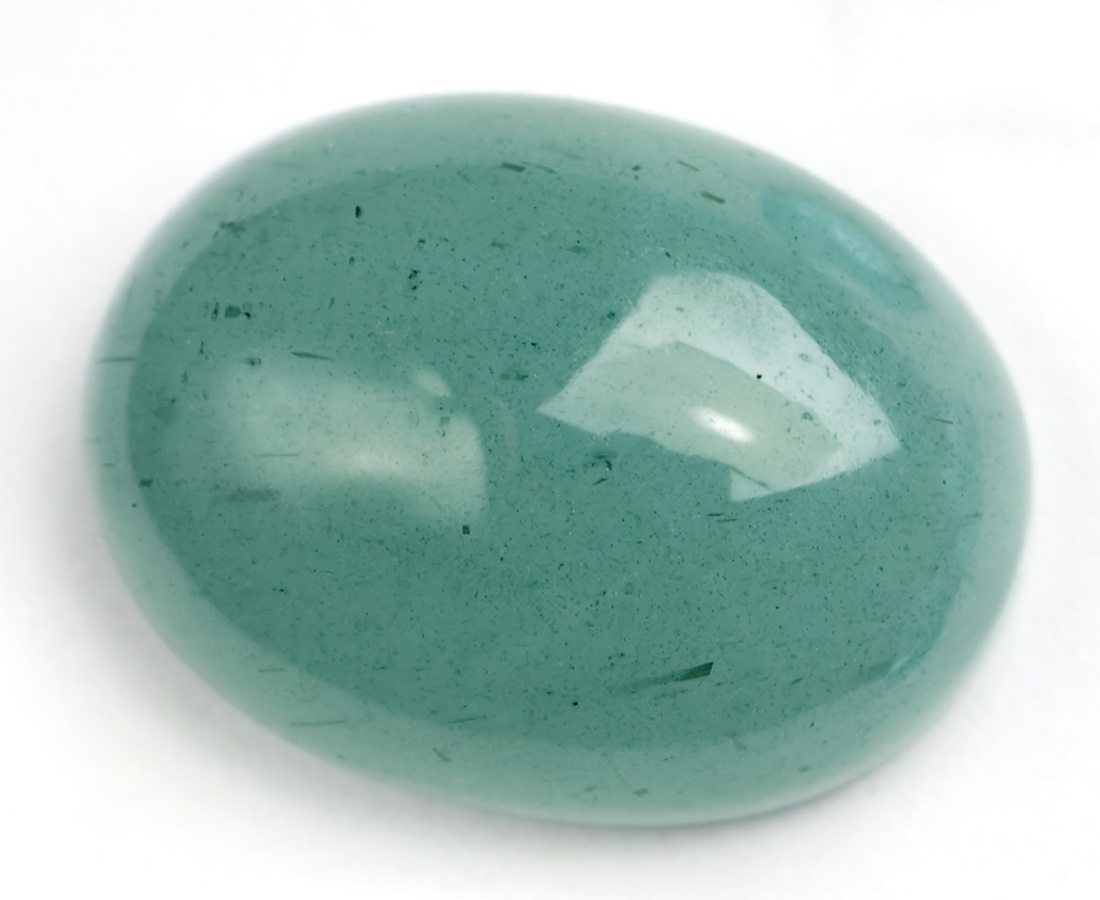
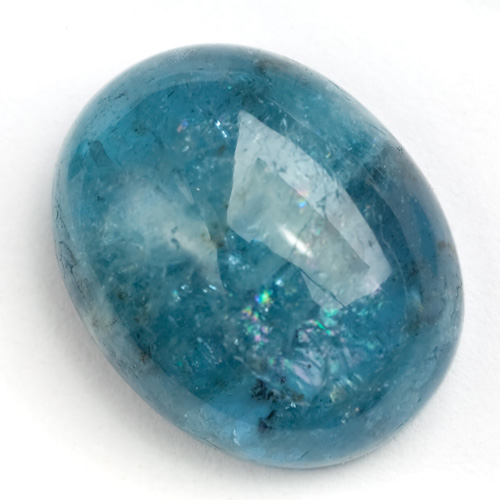
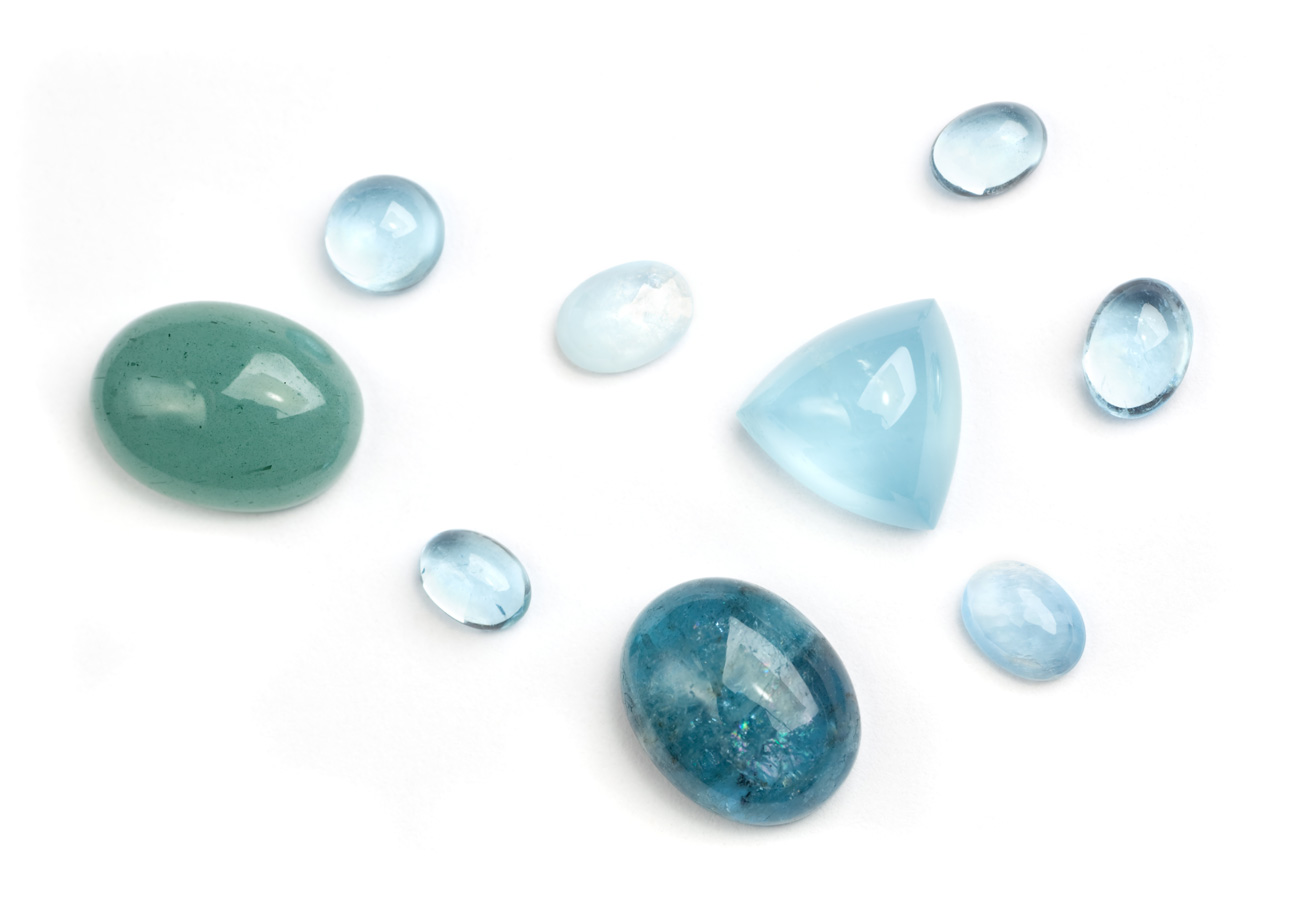
In the 19th century the preferred colour for aquamarine was sea-green, and indeed the name itself means sea water. Today, the most valued colours are sky-blue and dark blue. Aquamarine is dichroic, appearing blue or colourless as the stone is viewed from different angles. Gem-quality aquamarine is found as hexagonal crystals, which may be up to 1m long and flawless, with striations along the length of the crystal. Aquamarine is often cut with the table facet parallel to the length of the crystal in order to emphasize the deepest coloration.

The best of the gem-quality aquamarine is found in Brazil, where it occurs in pegmatites and alluvial deposits of gravel, locally called cascalho. Other localities include the Urals (Russia), Afghanistan, Pakistan, India and more recently exploited, Nigeria. A dark blue variety occurs in Madagascar.

Almost all aquamarine in the market has been heat-treated to enhance its colour. Care must be taken not to overheat the stones, as they may become colourless.

Visit aquamarine meaning for more information.


Properties
Chemical Composition: 
Beryllium Aluminium Silicate (Be3Al2(SiO3)6; Trace elements are Cr, V, Fe, Mn, etc.
Classification / Type: 
-
Colors / Varieties: 
Blue to sky blue
Crystal System / Forms: 
Hexagonal System
Hardness: 
7.5 - 8
Specific Gravity: 
2.68 - 2.80
Cleavage / Fracture: 
Poor cleavage / parting parallel to the basal plane.
Optic Character: 
Anisotropic, D.R.; Uniaxial Negative.
Lustre: 
Vitreous.
Refractive Index / Birefringence: 
1.577 - 1.583 / 0.006 - 0.009. R.I. Range: 1.57 - 1.60
Pleochroism: 
Distinct dichroism depending on depth of color.
Dispersion: 
0.014
Magnification: 
Parallel two phase or rain inclusions, crystalline inclusions, fingerprints, hexagonal growth zoning.
U.V. Fluorescence: 
Variable.
Spectrum: 
Not well pronounced.
Cause of Color: 
Iron
Treatment (Enhancement): 
Specific Tests & Remarks: 
-
Synthesis: 
Flux fusion and hydrothermal method (not commercially available)
Simulants (with key separation tests): 
Topaz (R.I., S.G., inclusions), glass (optic character), synthetic spinel (optic character, R.I., S.G.), synthetic quartz (optic figure, R.I.), petalite (optic figure, R.I., S.G.)
Geological Occurrence: 
Granitic rocks - pegmatite and schists, in hydrothermal veins and metamorphic limestone.
Sources: 
Brazil (Minas Gerais), Russia (Ural Mountains), Madagascar, Africa (Mozambique, Nigeria), Sri Lanka, India (Orissa, Tamil Nadu, Karnataka, Rajasthan, Madhya Pradesh), U.S.A.
Cuts & Uses: 
Facetted cuts, cabochons, beads, carvings, etc.

Did you know?

Jewellery is one of the most bought products online. An estimated $1 billion USD of diamonds are bought annually via the Internet. Over 40 million people use the Internet to trade!

In Germany, the garland of ambers is hung around the necks of the infants, so that their teeth might come out without much trouble.

In Turkey, people fix a piece of amber in the hubble-bubble, dogged by an age old belief that the presence of the jewel would destroy all the germs and no disease would spread, even after many have dragged their puffs from it.

In Greece, people think if wine is poured into the cups made of amethyst, one does not get drunk after drinking that.

In Rome, a talisman having coral pieces is considered very auspicious to quell the bad spells of evil look. The Romans were in the habit of hanging chains made of ancient coral pieces from the cradle of the infants to protect them from evil effects.

In China, people wear rings studded with tiny conch or oyster shells as they believe it cures all aches such as stomach ache, worms and like.

In India, pendants made of silver and studded with pearls are hung from the necks of the children to save them from any bad effects.

Greeks still believe, if women wear blue sapphires then no sense of immorality would pollute their mind nor can any fear of the supernatural can trouble them.

The Pope Innocent III had circulated an order asking all the priests wear blue sapphire, so that morality can be strengthened.

It is said about turquoise, that when the stone changes its color into yellow, it actually signals bad times to the person who wears it.

It is believed that a turquoise gifted to a friend or a lover turns his or her life into one of happiness and good luck.

Poll