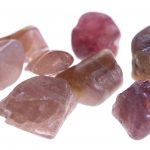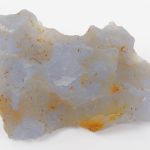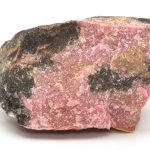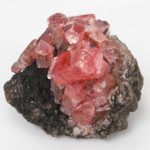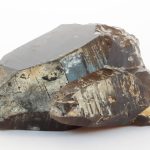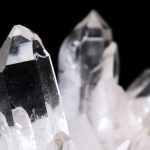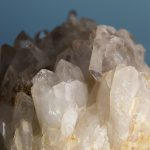
The name spine has been derived from the Latin word spina, meaning little thorn, referring to the sharp points on some crystals. Sometimes blood red spinel is known as ruby spinel.
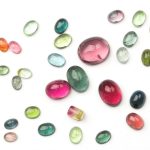
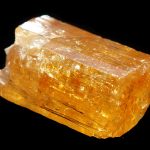
Spinel is found in a wide range of colors due to the presence of various impurities, and is transparent to almost opaque. Red spinel is due the presence of chromium + iron and is the most popular, although for many years it was thought to be a variety of ruby. The orange-yellow or orange-red variety is called rubicelle (a diminutive of the French word for ruby). Blue spinel is due to the presence of iron and less commonly by cobalt. Occasionally, inclusions of crystals such as magnetite or apatite may occur, and some Sri Lankan spinels may include zircon crystals surrounded by brown haloes. Star stones are rare, but when in cabochon may show 4-rayed or 6-rayed starts.
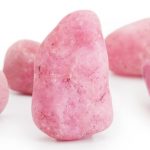
Spinel occurs in granites and metamorphic rocks, and is often found in association with corundum. Octahedral crystals and waterworn pebbles in a wide range of colors are found in the gem gravels of Burma, Sri Lanka, and Madagascar. Other localities include Afghanistan, Pakistan, Brazil, Australia, Sweden, Italy, Turkey, the former USSR, and the USA.
Synthetic spinel has been manufactured since 1910. It has been used to imitate diamond, or colored to imitate gemstones such as aquamarine and zircon. Blue synthetic spinel, colored by cobalt, has been used to imitate blue sapphire.
Did you know?
Jewellery is one of the most bought products online. An estimated $1 billion USD of diamonds are bought annually via the Internet. Over 40 million people use the Internet to trade!
In Germany, the garland of ambers is hung around the necks of the infants, so that their teeth might come out without much trouble.
In Turkey, people fix a piece of amber in the hubble-bubble, dogged by an age old belief that the presence of the jewel would destroy all the germs and no disease would spread, even after many have dragged their puffs from it.
In Greece, people think if wine is poured into the cups made of amethyst, one does not get drunk after drinking that.
In Rome, a talisman having coral pieces is considered very auspicious to quell the bad spells of evil look. The Romans were in the habit of hanging chains made of ancient coral pieces from the cradle of the infants to protect them from evil effects.
In China, people wear rings studded with tiny conch or oyster shells as they believe it cures all aches such as stomach ache, worms and like.
In India, pendants made of silver and studded with pearls are hung from the necks of the children to save them from any bad effects.
Greeks still believe, if women wear blue sapphires then no sense of immorality would pollute their mind nor can any fear of the supernatural can trouble them.
The Pope Innocent III had circulated an order asking all the priests wear blue sapphire, so that morality can be strengthened.
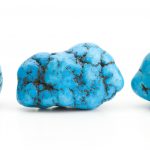
It is said about turquoise, that when the stone changes its color into yellow, it actually signals bad times to the person who wears it.
It is believed that a turquoise gifted to a friend or a lover turns his or her life into one of happiness and good luck.
Jewellery is one of the most bought products online. An estimated $1 billion USD of diamonds are bought annually via the Internet. Over 40 million people use the Internet to trade!