Inorganic Gemstones

Amber

Amber Fossi

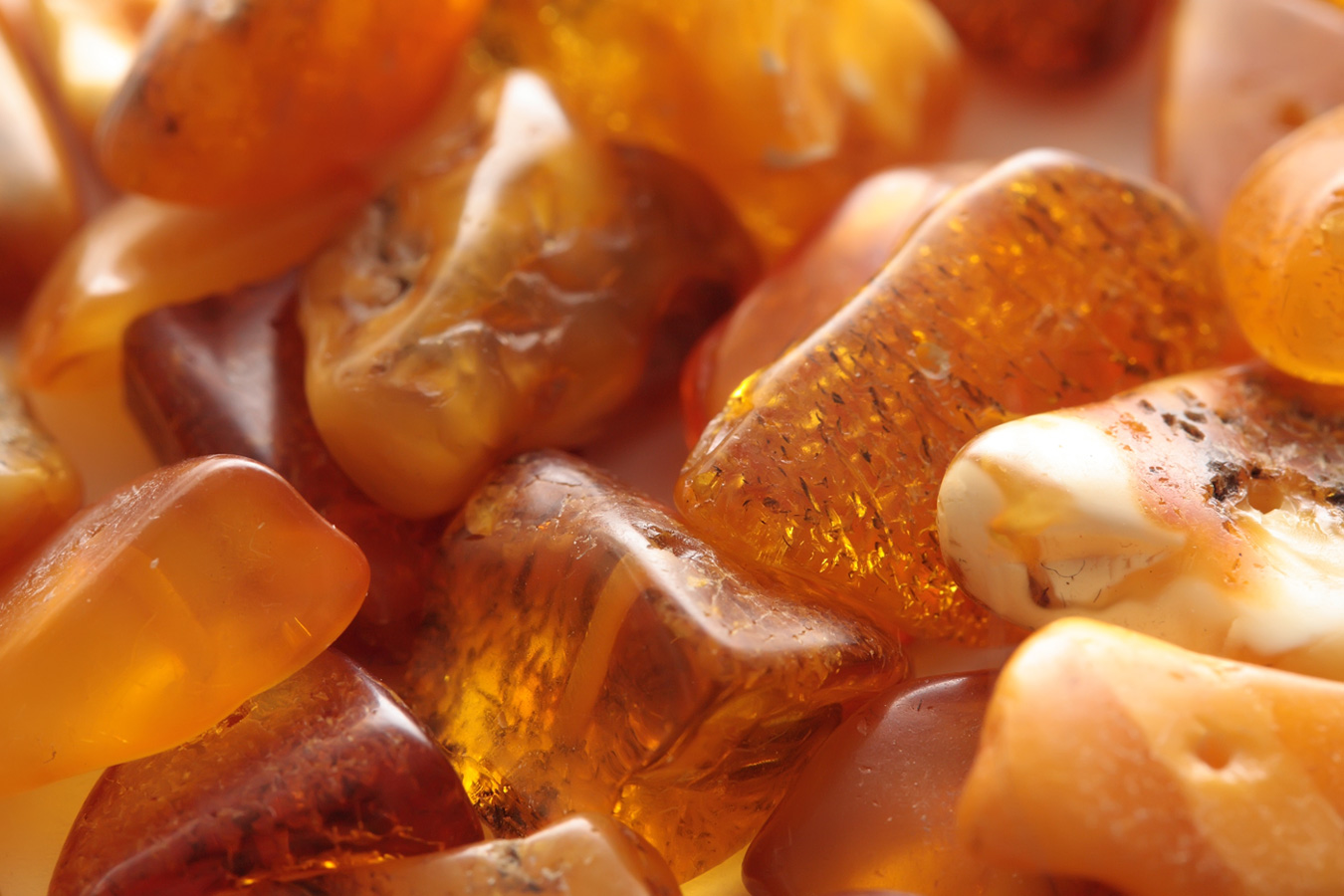
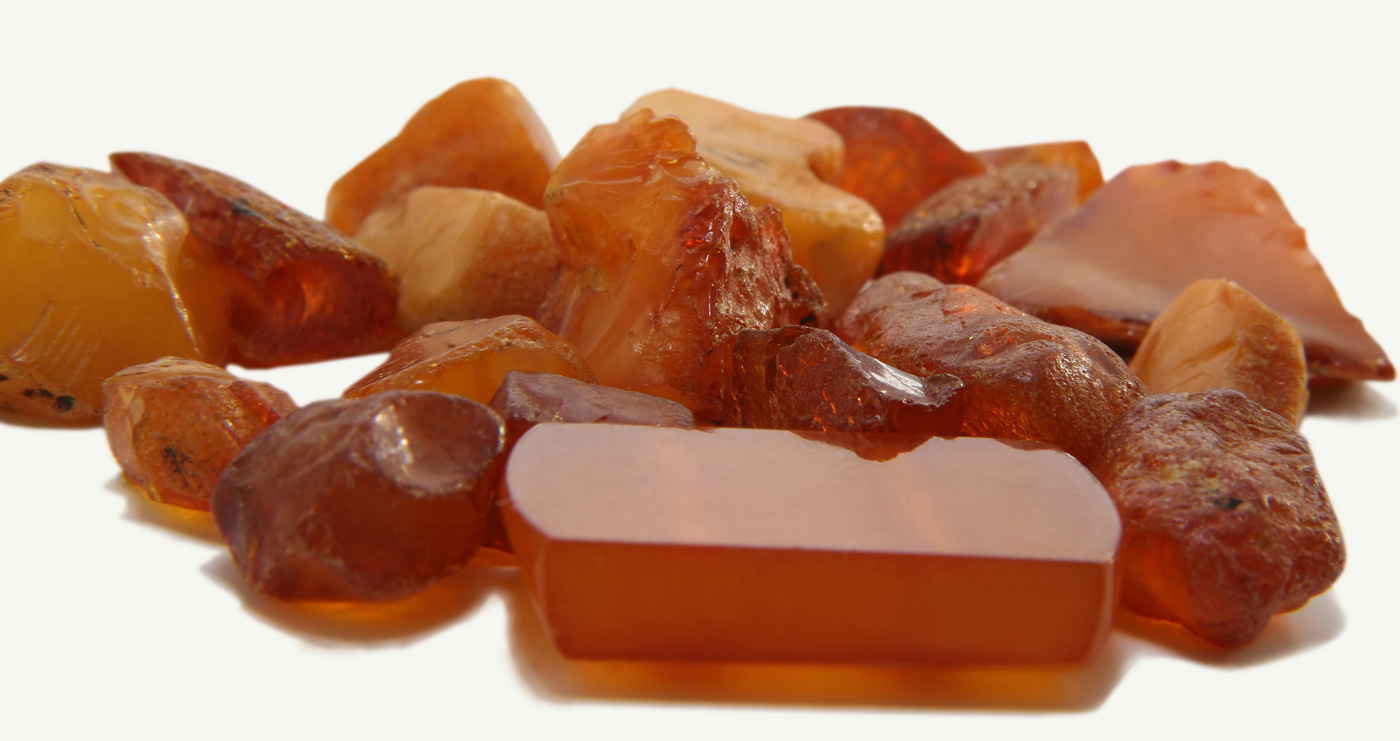
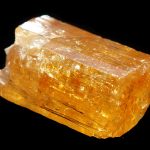
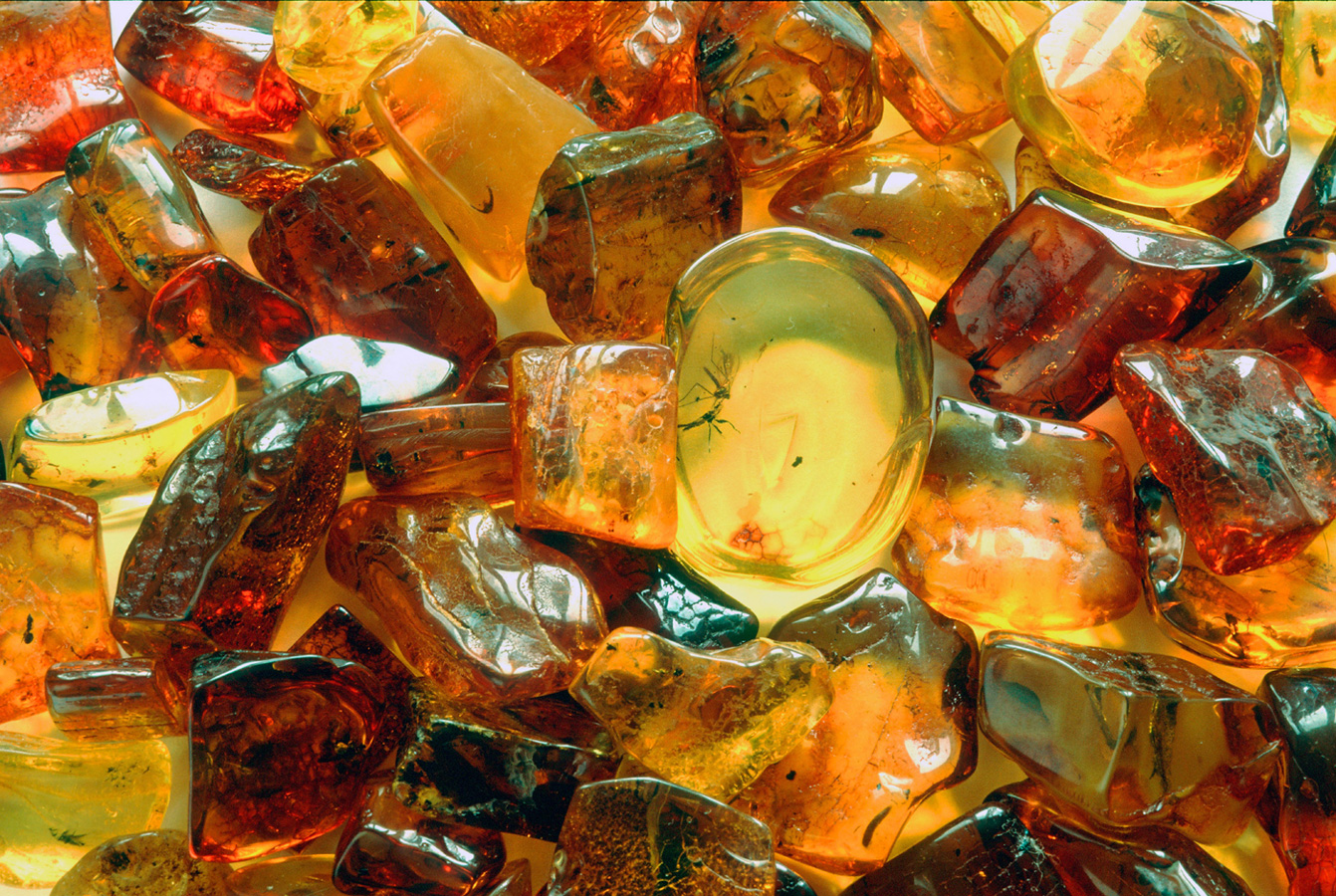
Meaning: Amber (Indian: Kerwa; Italian: Ambra) is the hardened and fossilized resin of certain pine trees such as the Pinus succinifera.

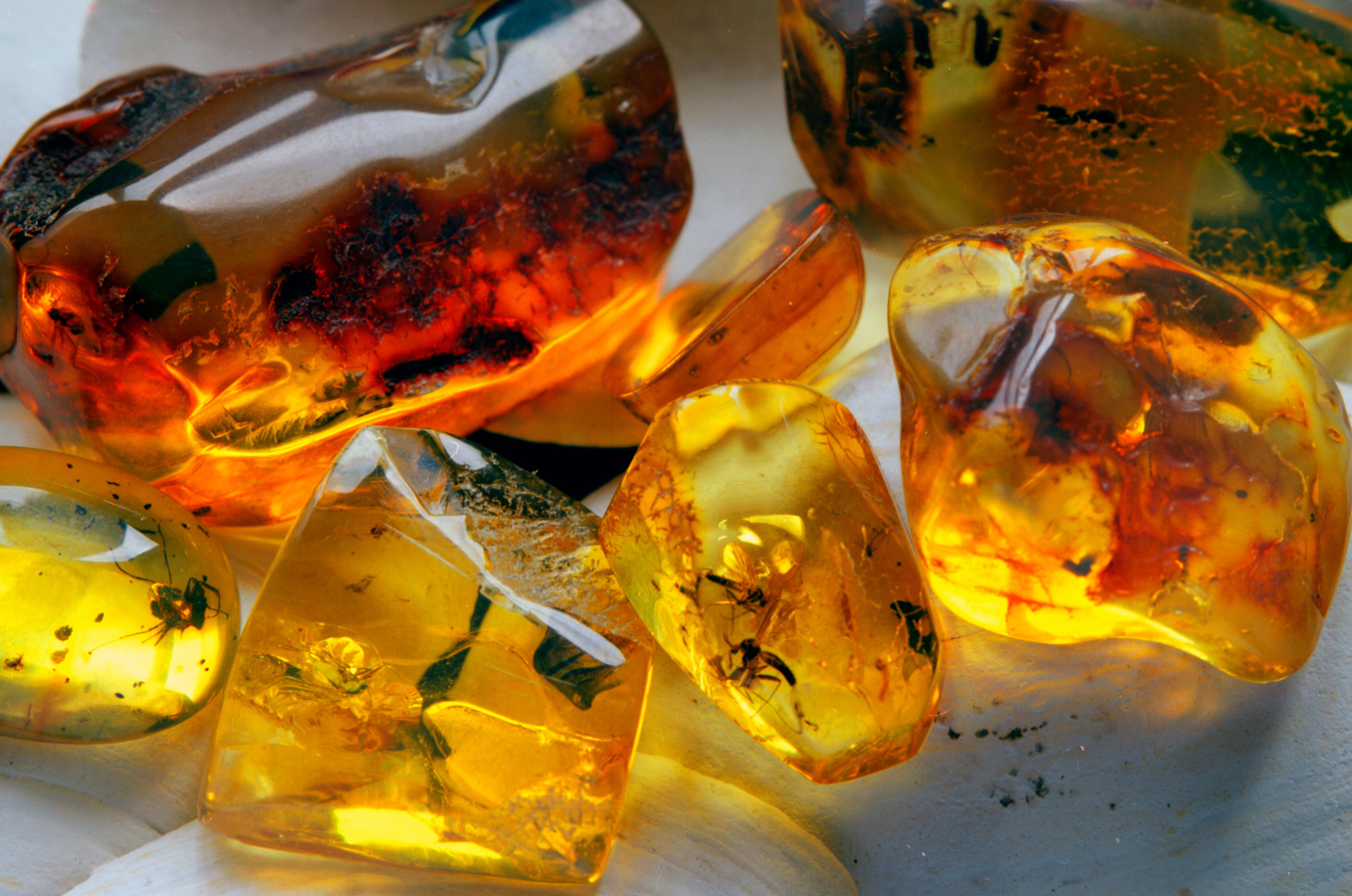
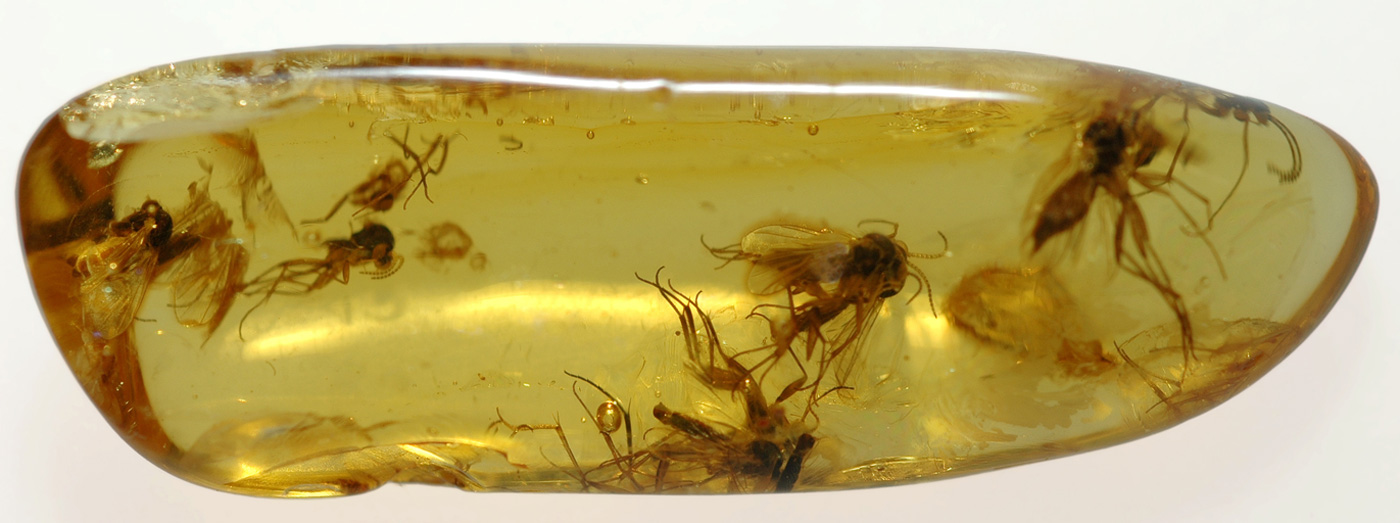
Amber is either collected from sea shores or fished off the waters, or it is mined by open - pit mining. Yellowish-brown or honey color is the best known color for amber which are fished or mined along the coasts of Baltic Sea, these are popularly known as Baltic amber. Natural ambers are very old from hundreds to millions of years. Inclusions like frog, butterflies, lizards, spiders, ants, mosquitoes and other insect species inside amber decides its worth.
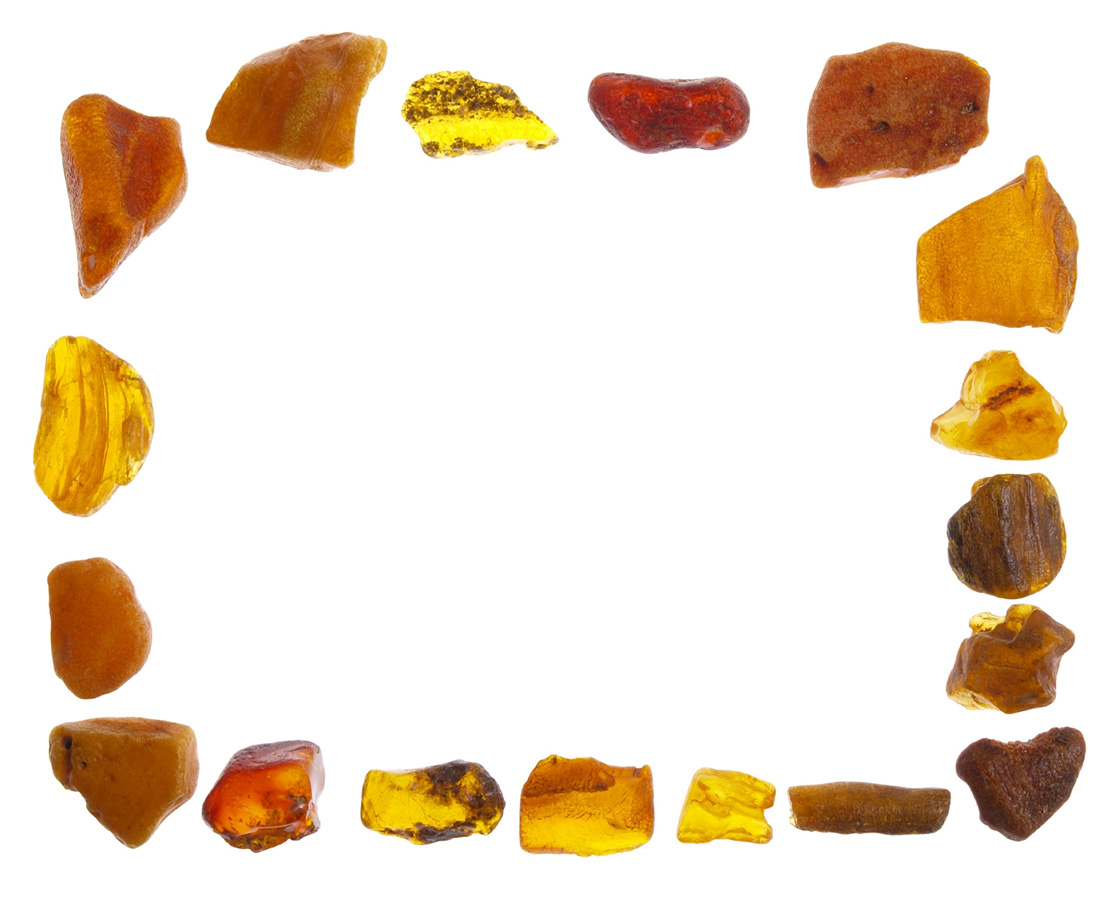
Copal resin (kauri gum) has similar appearance (simulant) that of an amber stone which is generally confused with real amber and mistakenly used in jewelry as amber beads.

Separation of real amber from plastic (imitation) amber.

S.G.
Amber 1.08 floats
Salt Water 1.12 liquid
Plastic 1.20 sinks

Take a glass of water and add 2 spoon of salt in it. Now dip amber and plastic inside this saturated salt solution. According to Archimedes Principle, which states that, if the S.G. of the stone is greater than that of the liquid it will sink and if the S.G. of the stone is less than that of the liquid it will float. Therefore, amber starts to float on saturated salt solution while plastic sinks. This test is only for separation of amber from plastic and confirms that amber floats in saturated salt solution. Real amber having inclusions of insects may react differently to this test.


Properties
Chemical Composition: 
C10H16O + H2S (approx.) as mixture of hydrocarbons, plus resins, succinic acid and oils
Classification / Type: 
Types of Amber:
  1. Sea Amber: found in the sea or washed up on the shore.
  2. Pit Amber: dug up form pits.
Colors / Varieties: 
Yellow, brown, red (sourced from Myanmar), orange. Color depends on source and impurities. Transparency: Transparent to opaque. Transparency depends on gas bubbles.
Crystal System / Forms: 
None. Amorphous.
Hardness: 
2 - 2.5
Specific Gravity: 
1.05 - 1.09 (usually 1.08)
Cleavage / Fracture: 
None / Conchoidal.
Optic Character: 
Usually an aggregate (A.G.G.) or strong A.D.R. reaction. But, may show any reaction.
Lustre: 
Resinous or greasy.
Refractive Index / Birefringence: 
±1.54 / Nil.
Pleochroism: 
None
Dispersion: 
None
Magnification: 
Amber is noted for its inclusions which are chiefly insects and leaves, gas bubbles, flow lines, other natural inclusions such as pyrite, calcite, etc.
U.V. Fluorescence: 
Bluish white in shortwave and yellow in longwave.
Spectrum: 
Not diagnostic.
Treatment (Enhancement): 
  • Coating: darker colored materials are coated over the surface.
  • Colorless and colored impregnation: to improve the clarity using rape seed oil. Color staining is done to get aged amber and also other colors.
  • Heating: darkens the color in some varieties of amber, clarifies cloudy varieties with plenty of gas bubbles by heating in oil and causes stress cracks to form which is know as sun spangled amber.
Specific Tests & Remarks: 
  • Amber floats in a saturated salt solution.
  • Amber, pressed amber and copal resin break away in powdery splinters or chips with a knife and exhibit static electricity when rubbed.
  • Amber, when burnt emits an aromatic odour.
  • Amber does not soften with ether.
  • Amber softens at about 150°C and melts at 250°C - 300°C.
  • Amber often darkens with age to a fine red brown color.
Synthesis: 
Not commercially synthesized.
Simulants (with key separation tests): 
  • Pressed amber (amberoid): May show elongated gas bubbles and flow lines, outlines of varying clarity of each of the pieces pressed may be seen. Under longwave ultra violet lamp it may show blue white fluorescence. It is not affected by ether or acetone.
  • Copal resin: A drop of ether or acetone will soften and form a stick path. Under shortwave ultra violet lamp it exhibits strong white fluorescence.
  • Plastic (bakelite, celluloid, etc.): Higher S.G. than amber. Peels with a knife and floats in a saturated salt solution.
  • Glass: R.I. & S.G.
  • Chalcedony: S.G. Structure
Geological Occurrence: 
In sedimentary deposits and on shore lines.
Sources: 
  • Along the coasts of the Baltic Sea, where 90% of gem quality amber is fished or mined.
  • Other sources include Sicily, Romania, Dominican Republic, Mexico, Hawaii, Myanmar (red amber with higher S.G.), etc.
Cuts & Uses: 
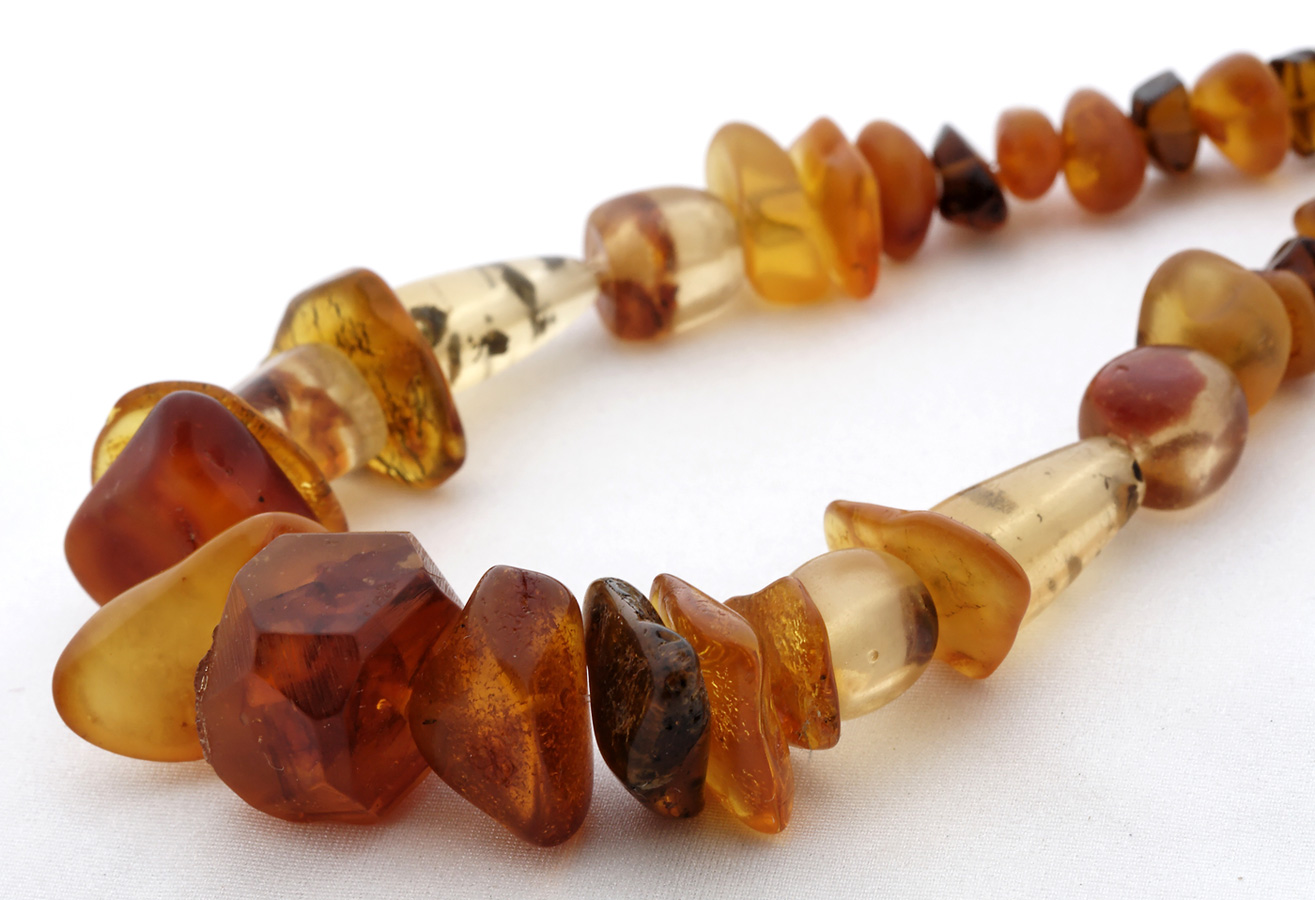
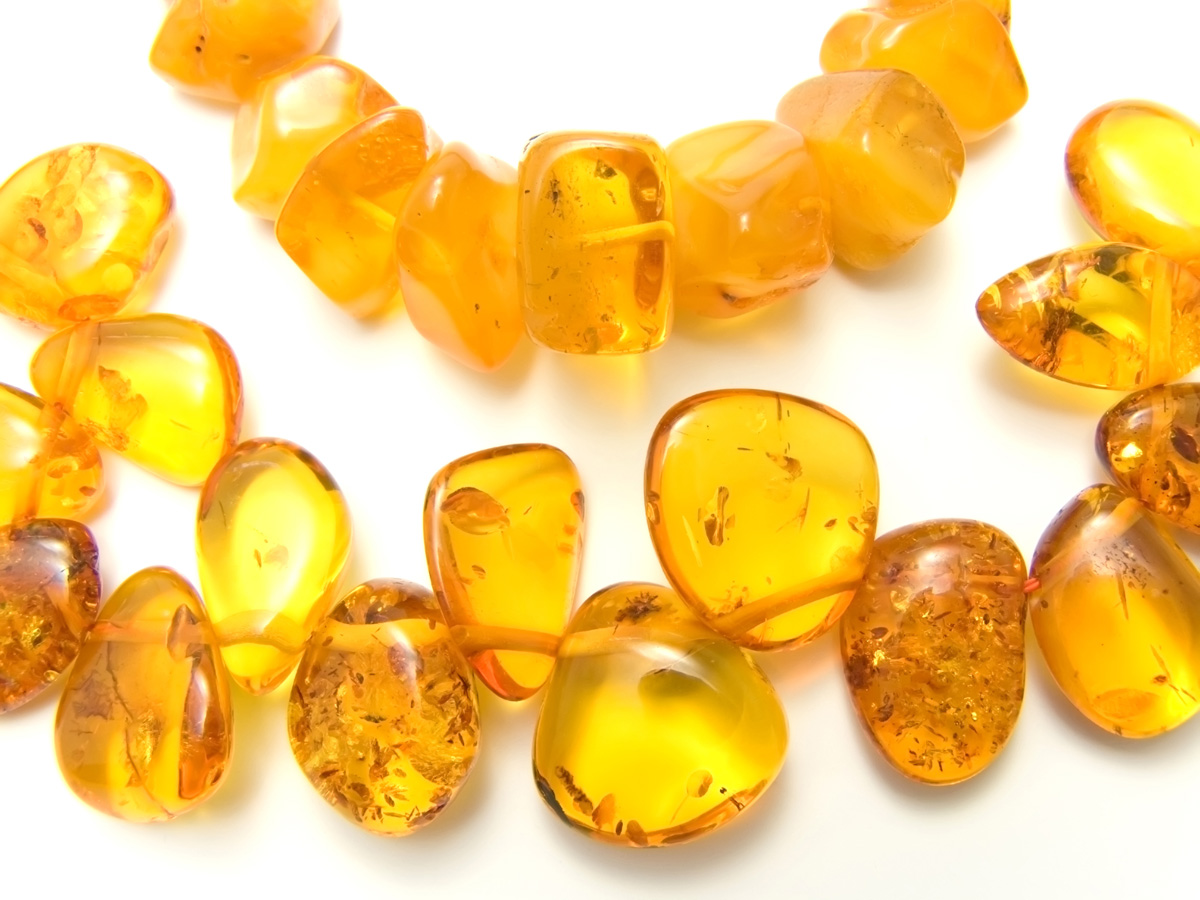
Mostly as cabochons, beads, carvings, etc.

Click on this link for meaning of amber gemstone.

Did you know?

Jewellery is one of the most bought products online. An estimated $1 billion USD of diamonds are bought annually via the Internet. Over 40 million people use the Internet to trade!

In Germany, the garland of ambers is hung around the necks of the infants, so that their teeth might come out without much trouble.

In Turkey, people fix a piece of amber in the hubble-bubble, dogged by an age old belief that the presence of the jewel would destroy all the germs and no disease would spread, even after many have dragged their puffs from it.

In Greece, people think if wine is poured into the cups made of amethyst, one does not get drunk after drinking that.

In Rome, a talisman having coral pieces is considered very auspicious to quell the bad spells of evil look. The Romans were in the habit of hanging chains made of ancient coral pieces from the cradle of the infants to protect them from evil effects.

In China, people wear rings studded with tiny conch or oyster shells as they believe it cures all aches such as stomach ache, worms and like.

In India, pendants made of silver and studded with pearls are hung from the necks of the children to save them from any bad effects.

Greeks still believe, if women wear blue sapphires then no sense of immorality would pollute their mind nor can any fear of the supernatural can trouble them.

The Pope Innocent III had circulated an order asking all the priests wear blue sapphire, so that morality can be strengthened.

It is said about turquoise, that when the stone changes its color into yellow, it actually signals bad times to the person who wears it.

It is believed that a turquoise gifted to a friend or a lover turns his or her life into one of happiness and good luck.

Poll