Sugilite

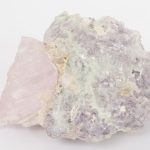
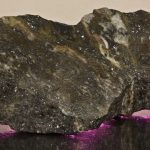
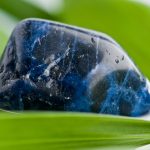
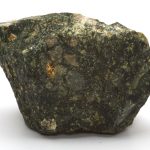
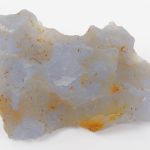
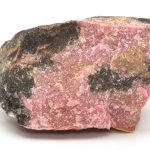
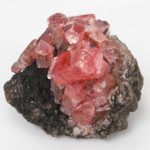
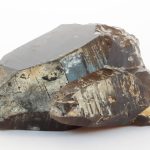
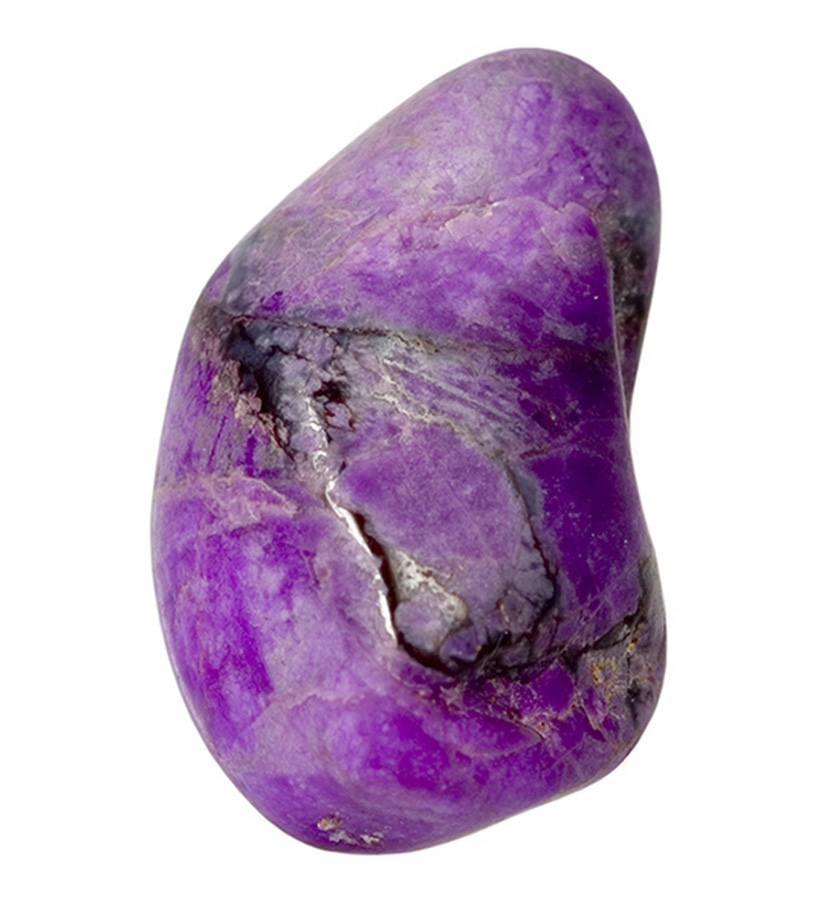
Rough Sugilite

Sugilite is deep reddish purple to purple, semi-transparent to opaque, complex silicate of alkali metals, iron, aluminium, etc with water content. It is normally occurred in massive form with small crystals.

Sugilite can be confused with a similar appearing mineral called Sogdianite, which can be distinguished by specific gravity and presence of zirconium and titanium in Sogdianite. Sugilite is mainly sourced from Japan and South Africa. It is widely used as beads in jewelry making.

Properties
Chemical Composition: 
(K,Na)(Na,Fe3+)2(Li2Fe+3)Si12O3o + Mn - Complex silicate of alkali metals, iron, aluminium etc. and has a water content.
Classification / Type: 
-
Colors / Varieties: 
Reddish purple to purple, lavender, pink, yellow - brown / Semi-transparent to opaque.
Crystal System / Forms: 
Hexagonal / Commonly massive form, prismatic crystals.
Hardness: 
6.5 - 7.5
Specific Gravity: 
2.74
Cleavage / Fracture: 
None / Granular fracture.
Optic Character: 
Anisotropic, D.R.; Uniaxial negative. Generally aggregates (A.G.G.).
Lustre: 
Sub - Vitreous.
Refractive Index / Birefringence: 
1.606 - 1.610 / 0.004
Pleochroism: 
None.
Dispersion: 
None.
Magnification: 
Surface texture.
U.V. Fluorescence: 
Inert.
Spectrum: 
Bands at 411nm, 419nm, 437nm, diffused band at 570nm.
Cause of Color: 
Manganese and iron.
Treatment (Enhancement): 
-
Specific Tests & Remarks: 
Recognized by the deep violet color.
Synthesis: 
-
Simulants (with key separation tests): 
  • Mistaken for another mineral Sogdianite (higher S.G., presence of Zr + Ti)
  • Charoite (wavy fibrous structure with sheen)
  • Dumortierite (structure)
Geological Occurrence: 
In manganese ores.
Sources: 
South Africa, Japan.
Cuts & Uses: 
Cabochons, beads, carving, etc.

Did you know?

Jewellery is one of the most bought products online. An estimated $1 billion USD of diamonds are bought annually via the Internet. Over 40 million people use the Internet to trade!

In Germany, the garland of ambers is hung around the necks of the infants, so that their teeth might come out without much trouble.

In Turkey, people fix a piece of amber in the hubble-bubble, dogged by an age old belief that the presence of the jewel would destroy all the germs and no disease would spread, even after many have dragged their puffs from it.

In Greece, people think if wine is poured into the cups made of amethyst, one does not get drunk after drinking that.

In Rome, a talisman having coral pieces is considered very auspicious to quell the bad spells of evil look. The Romans were in the habit of hanging chains made of ancient coral pieces from the cradle of the infants to protect them from evil effects.

In China, people wear rings studded with tiny conch or oyster shells as they believe it cures all aches such as stomach ache, worms and like.

In India, pendants made of silver and studded with pearls are hung from the necks of the children to save them from any bad effects.

Greeks still believe, if women wear blue sapphires then no sense of immorality would pollute their mind nor can any fear of the supernatural can trouble them.

The Pope Innocent III had circulated an order asking all the priests wear blue sapphire, so that morality can be strengthened.

It is said about turquoise, that when the stone changes its color into yellow, it actually signals bad times to the person who wears it.

It is believed that a turquoise gifted to a friend or a lover turns his or her life into one of happiness and good luck.

Poll