Inorganic Gemstones

Spodumene

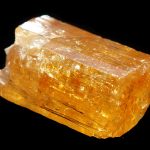
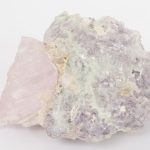
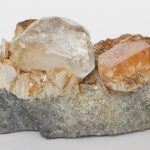
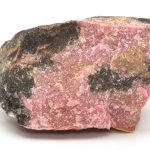
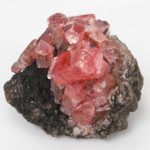
Spodumene (Kunzite) rough from Afghanistan.

Spodumene happens in a variety of colours, although the most typical is yellowish grey. Two gem varieties - lilac pink kunzite (coloured by manganese) and bright emerald green hiddenites (coloured by chromium) - are extremely well-liked by collectors, although perfect cleavage means they are fragile gemstones. Strong pleochroism is definitely observed in gem material, showing colourless and 2 shades from the body colour when viewed from different directions. Stones ought to always be cut to exhibit the very best colour with the table facet. The pink colour may fade as time passes, however, many material is irradiated to intensify it.

Spodumene was discovered in 1877 in Brazil, although it had been not until 1979 that kunzite and hiddenite were named different varieties of the identical mineral. Spodumene can also be present in Madagascar, Burma, the united states, Canada, the first kind USSR, Mexico and Sweden.

Lilac-pink kunzite is known as following the gemmologist G.F. Kunz, who first described it in 1902; hiddenites is known as after W.E. Hidden, who discovered it in New york in 1879.


Properties
Chemical Composition: 
Silicate of Lithium and Aluminium where sodium, iron or calcium may replace lithium. LiAl(SiO3)O2
Classification / Type: 
-
Colors / Varieties: 
  • Kunzite: Pink, Violet, Purplish.
  • Hiddenite: Emerald green (Cr)
  • Yellow and yellowish green, colorless to gray, blue
Crystal System / Forms: 
Monoclinic System / Long, flat, deeply striated crystals with steep terminations, often have a wood-like surface alteration; massive.
Hardness: 
7
Specific Gravity: 
3.18
Cleavage / Fracture: 
Perfect 2 directional prismatic cleavage at right angles / Splintery fracture
Optic Character: 
Anisotropic, D.R.; Biaxial positive
Lustre: 
Vitreous
Refractive Index / Birefringence: 
1.660 - 1.675 / 0.015; Range: 1.655 - 1.671
Dispersion: 
0.017
Magnification: 
Primary fluid inclusions, complex three phase liquid inclusions, needle-like etch tubes, twin planes and cleavage cracks, crystalline inclusions.
U.V. Fluorescence: 
Yellowish green: weak orange yellow
Spectrum: 
Yellow / yellowish green: Band at 437nm with a weaker band at 433nm.
Cause of Color: 
Yellowish green: Ferric iron
Treatment (Enhancement): 
Specific Tests & Remarks: 
In different lighting, exhibits reversible darkening and lightening of color.
Synthesis: 
-
Geological Occurrence: 
Granite pegmatite.
Sources: 
Brazil, Sri Lanka, U.S.A.
Cuts & Uses: 
Facetted cuts, cabochon, beads, carvings, etc. (table facet should be cut at right angles to the c-axis for best color).

Did you know?

Jewellery is one of the most bought products online. An estimated $1 billion USD of diamonds are bought annually via the Internet. Over 40 million people use the Internet to trade!

In Germany, the garland of ambers is hung around the necks of the infants, so that their teeth might come out without much trouble.

In Turkey, people fix a piece of amber in the hubble-bubble, dogged by an age old belief that the presence of the jewel would destroy all the germs and no disease would spread, even after many have dragged their puffs from it.

In Greece, people think if wine is poured into the cups made of amethyst, one does not get drunk after drinking that.

In Rome, a talisman having coral pieces is considered very auspicious to quell the bad spells of evil look. The Romans were in the habit of hanging chains made of ancient coral pieces from the cradle of the infants to protect them from evil effects.

In China, people wear rings studded with tiny conch or oyster shells as they believe it cures all aches such as stomach ache, worms and like.

In India, pendants made of silver and studded with pearls are hung from the necks of the children to save them from any bad effects.

Greeks still believe, if women wear blue sapphires then no sense of immorality would pollute their mind nor can any fear of the supernatural can trouble them.

The Pope Innocent III had circulated an order asking all the priests wear blue sapphire, so that morality can be strengthened.

It is said about turquoise, that when the stone changes its color into yellow, it actually signals bad times to the person who wears it.

It is believed that a turquoise gifted to a friend or a lover turns his or her life into one of happiness and good luck.

Poll