Opal

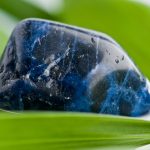
Pear Shaped Opal Cabochon

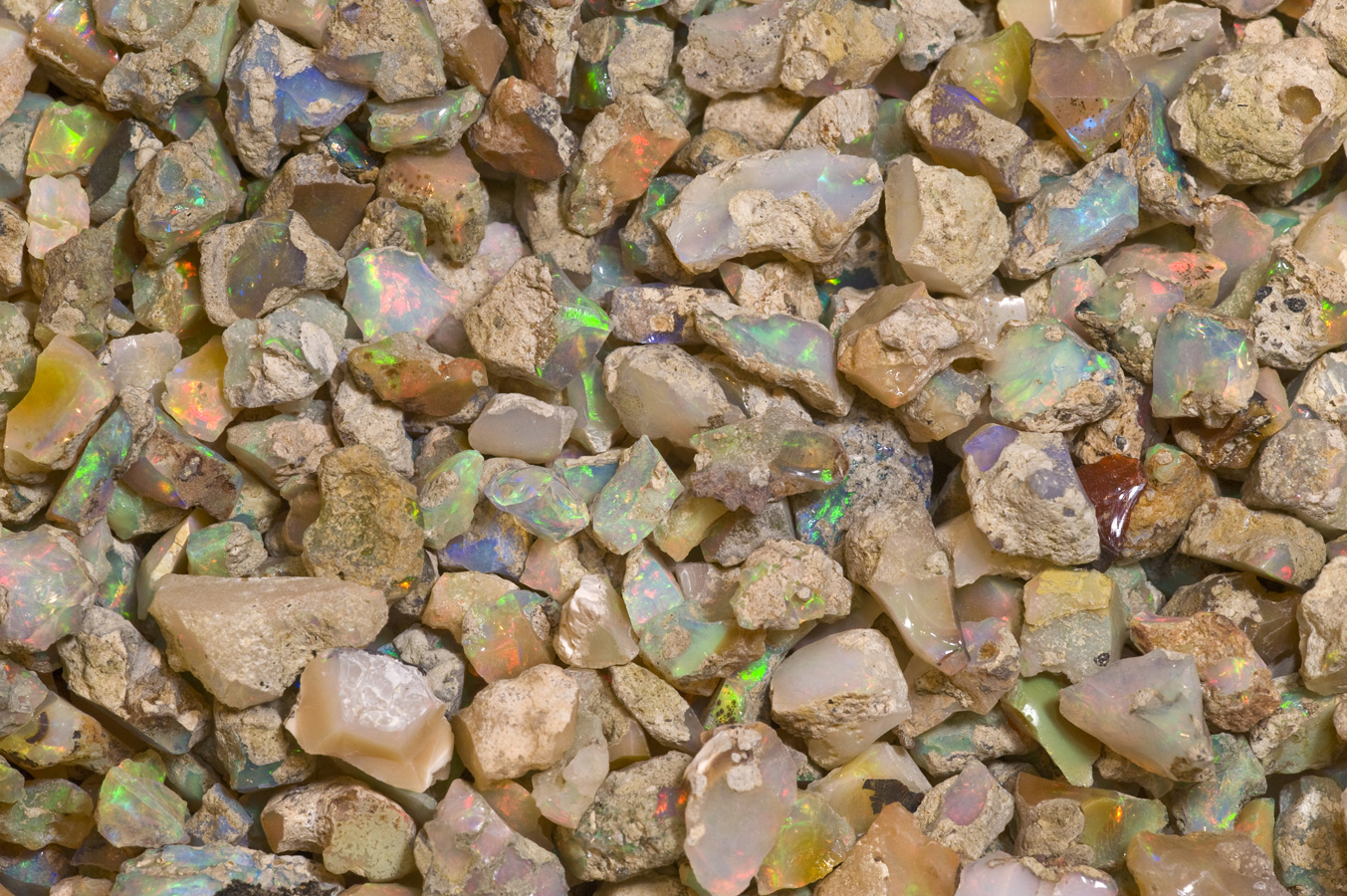
Opal is a mineraloid gel which is primarily sourced from Australia (called Australian Opals) and used as facetted cuts, cabochons, beads in jewelry.

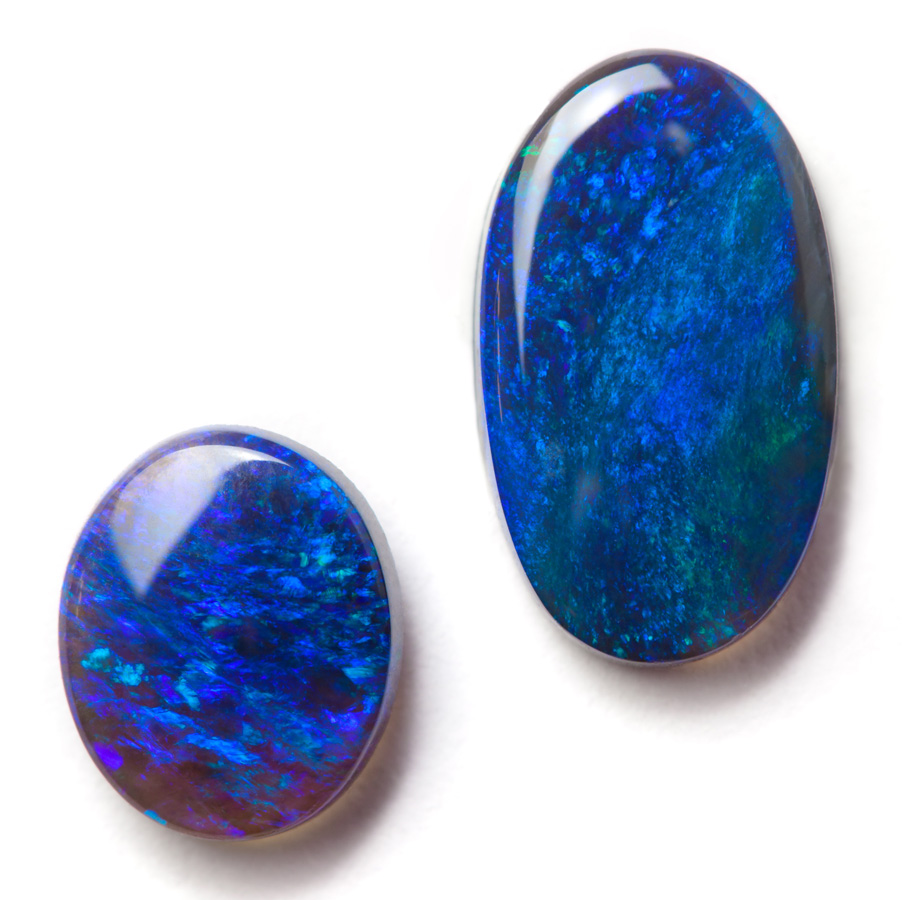
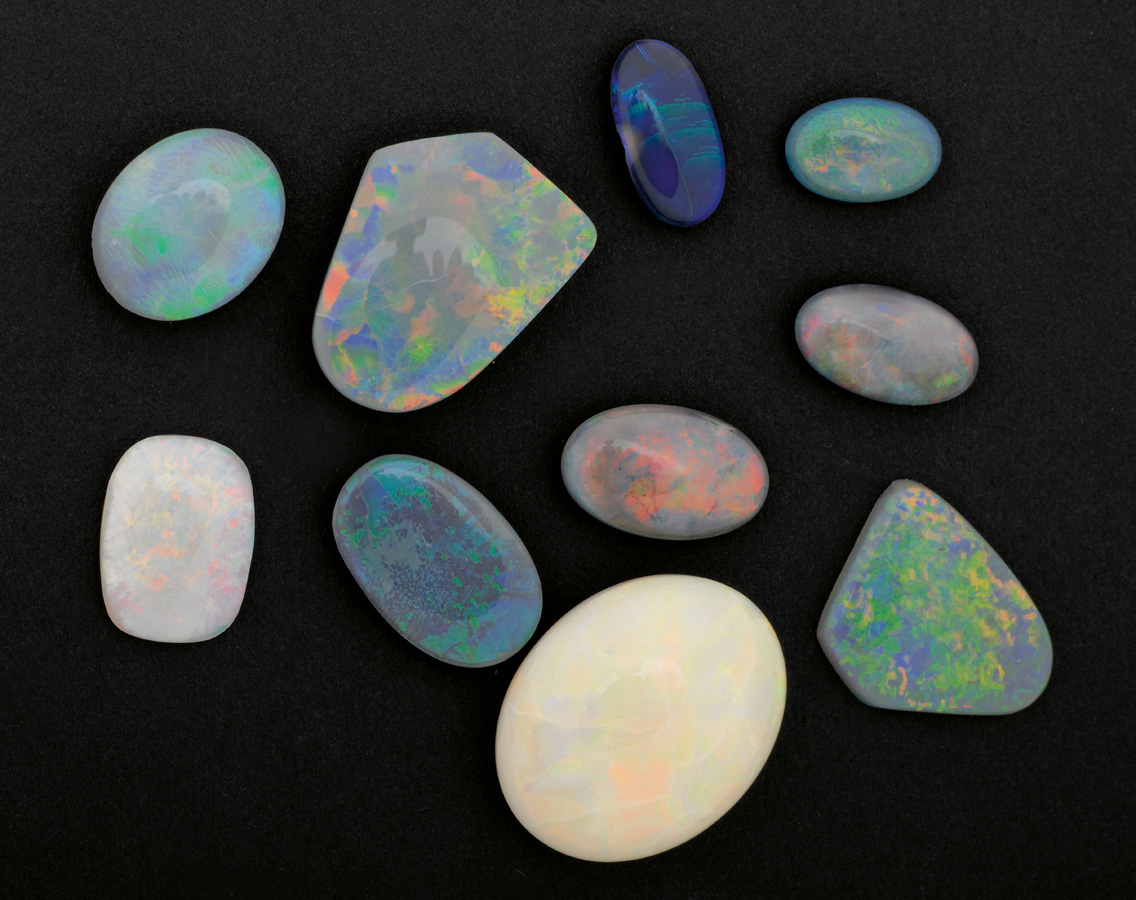
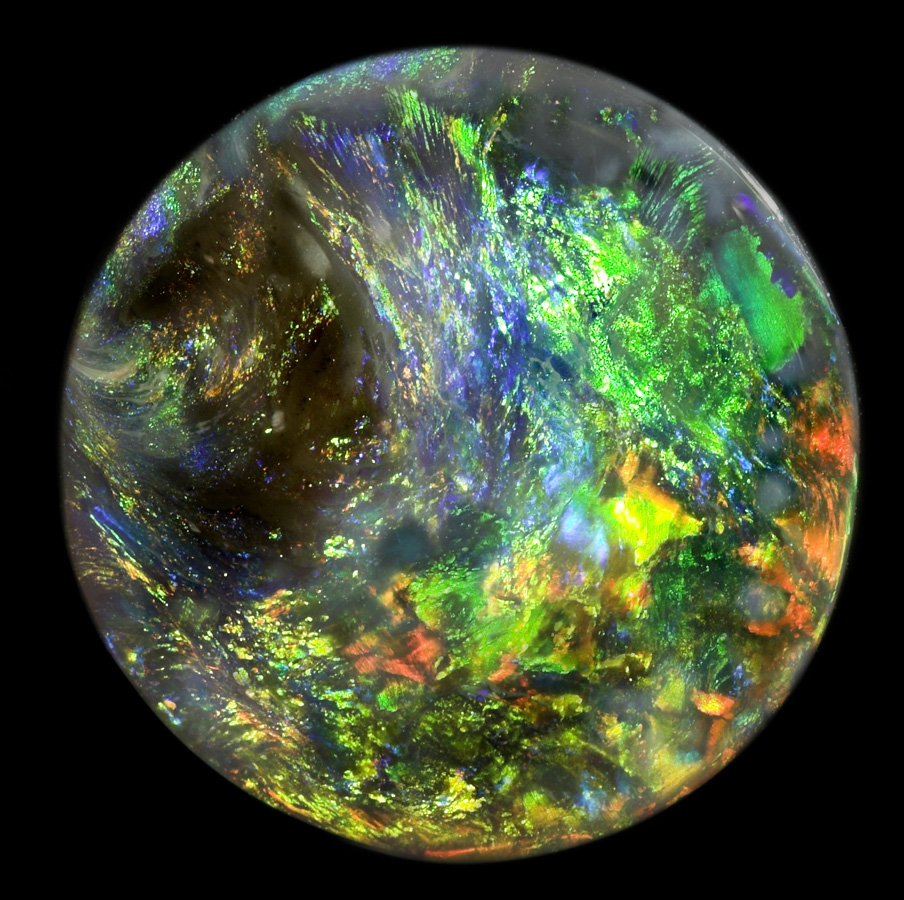
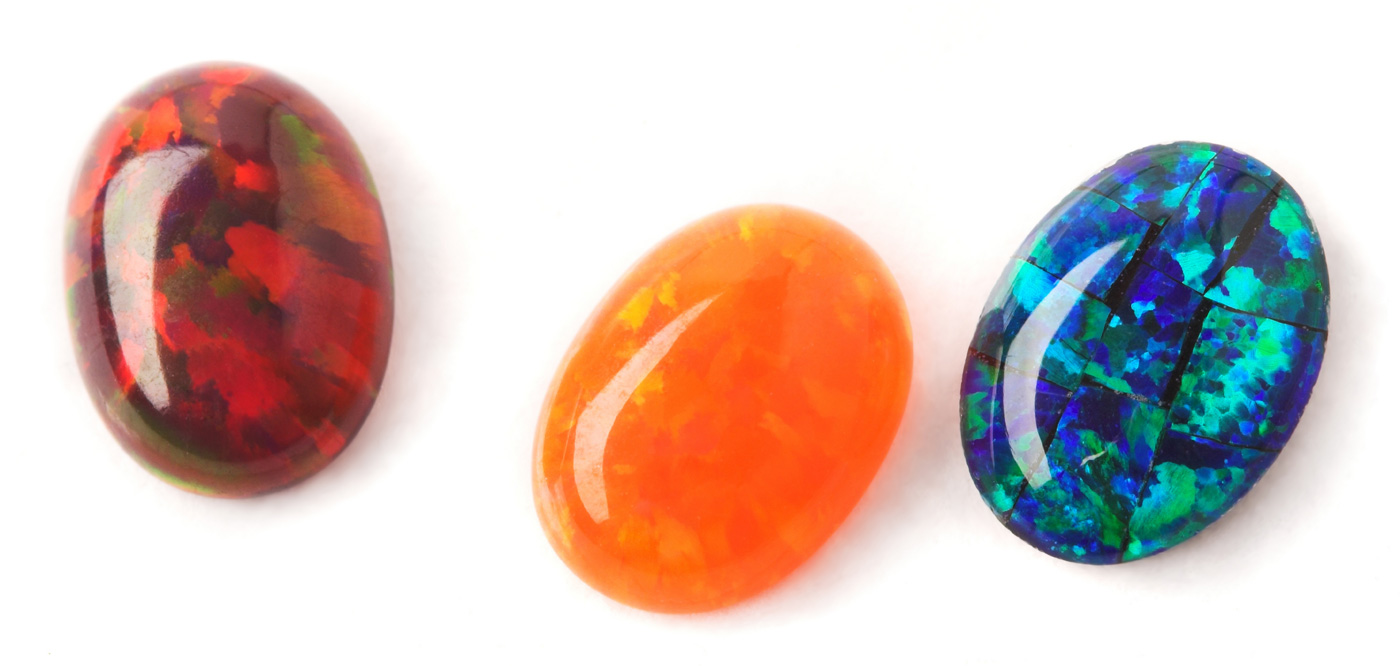
Opals are found in almost all colors. Opals having play of color are mostly sought by gem industry.


Properties
Chemical Composition: 
SiO2.nH2O + Al, Fe, Ca, Mg, Na in traces. Some contain small amounts of radioactive elements. Water percentage is variable.
Classification / Type: 
Types of Natural Opal
  1. Natural Opal type 1: Opal presented in one piece in its natural state (apart from cutting or polishing) and is of substantially homogenous chemical composition.
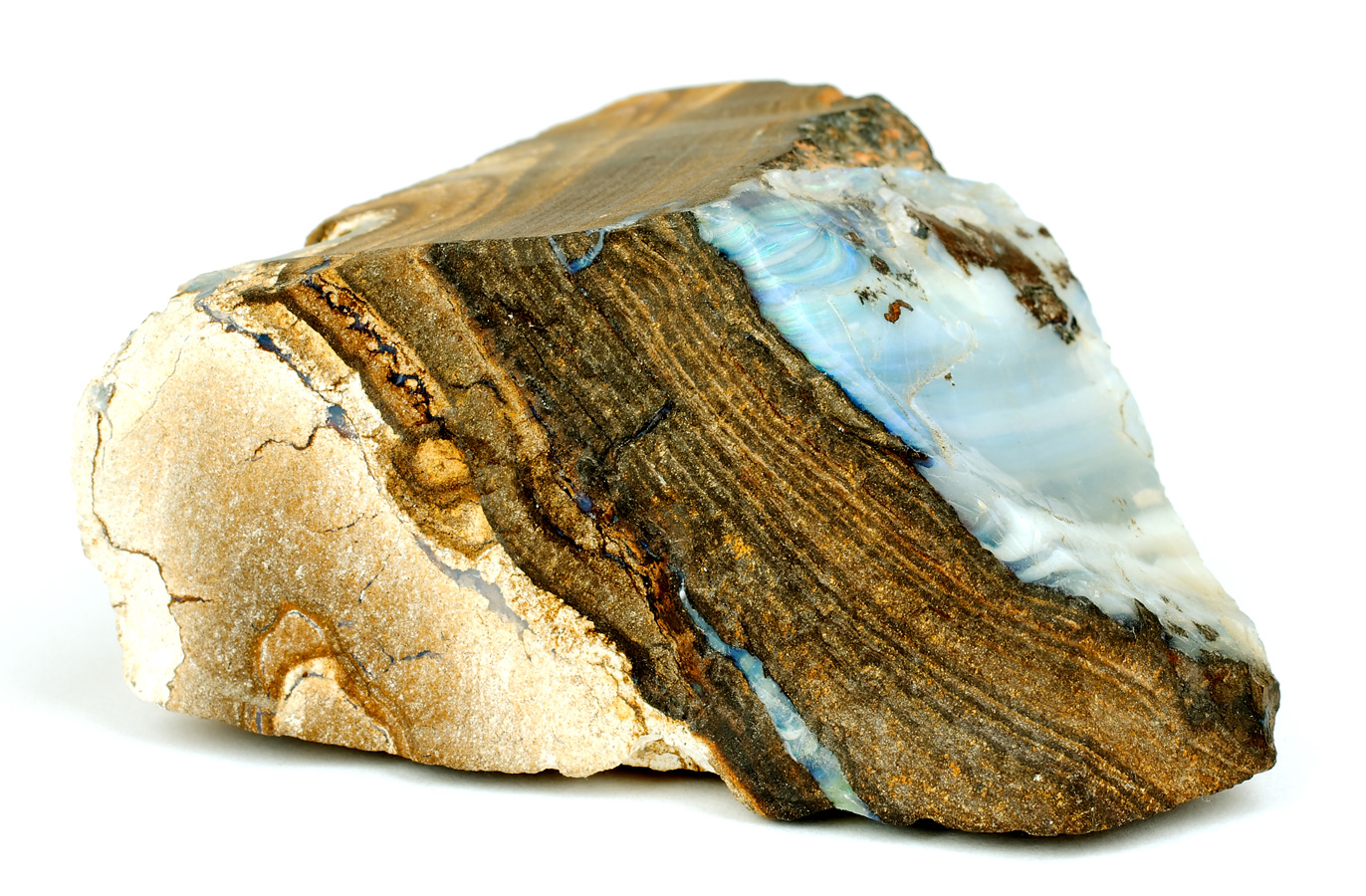
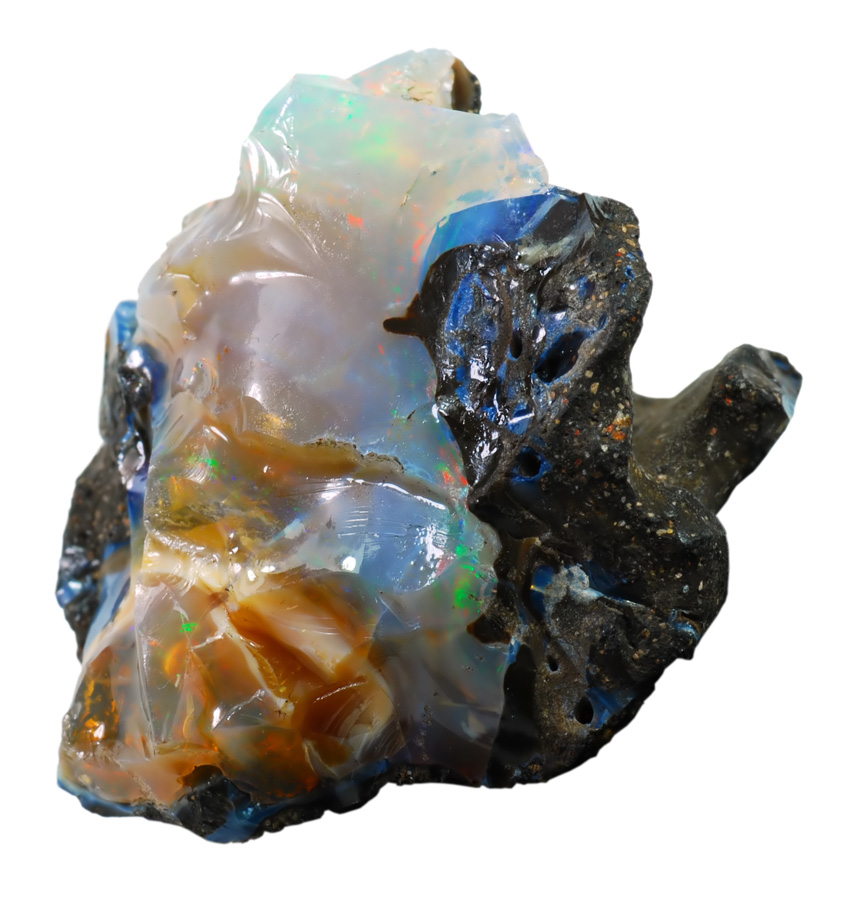
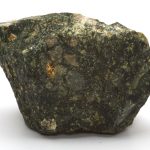
  2. Natural Opal type 2: Opal presented in one piece where the opal is naturally attached too the host rock in which it was formed and the host rock is of a different chemical composition. E.g.: Boulder Opal.
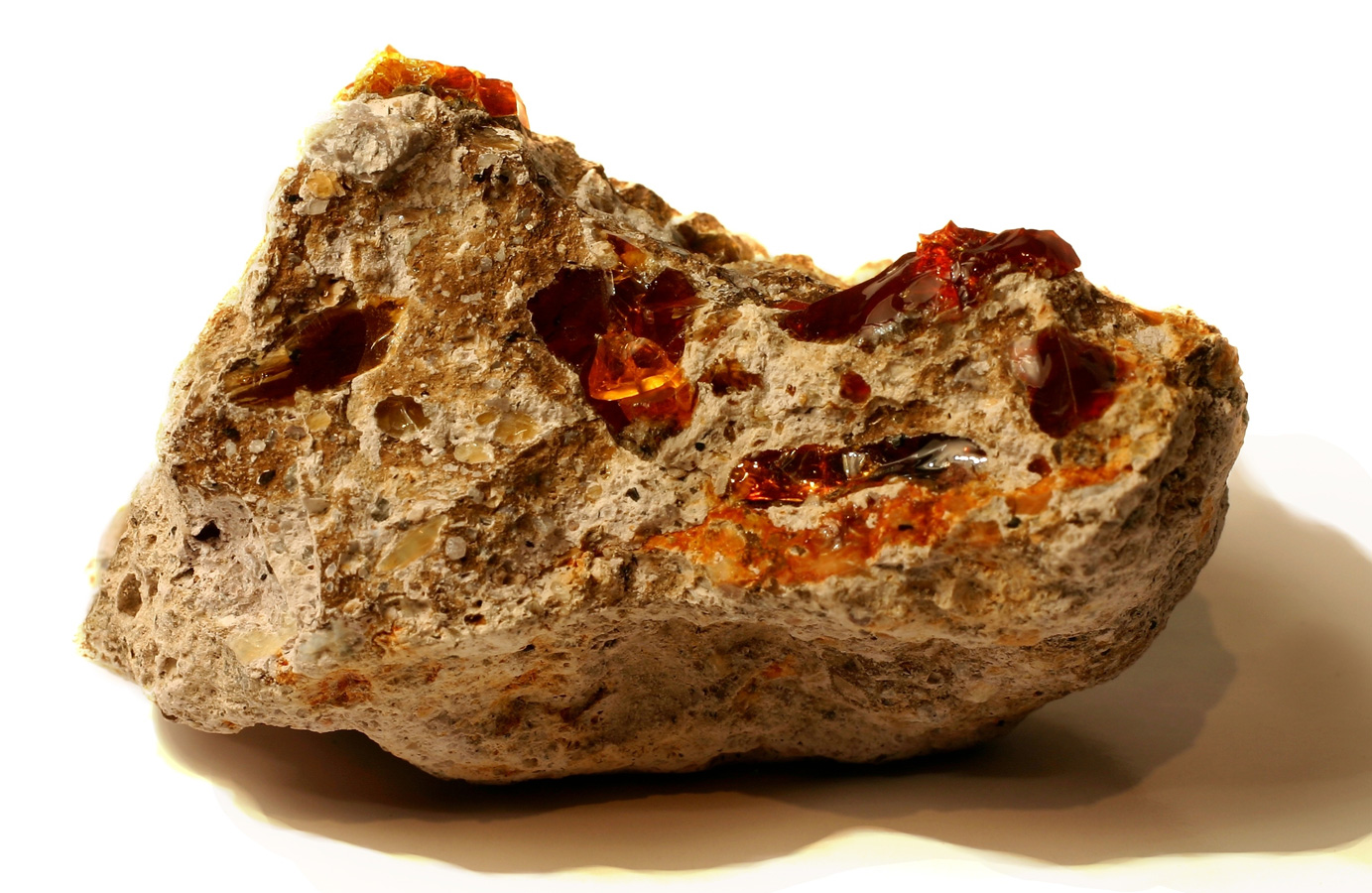
  3. Natural Opal type 3: Opal presented in one piece where the opal is intimately diffused as infillings of pores or holes between grains of the host rock in which it was formed. E.g.: Matrix Opal.
Colors / Varieties: 
The variety of natural opal is determined by body color and transparency.
  • White Opal with play of color
  • White (Potch) Opal without play of color
  • Black Opal with play of color
  • Boulder Opal
  • Matrix Opal
  • Hydrophane Opal - play of color seen in water
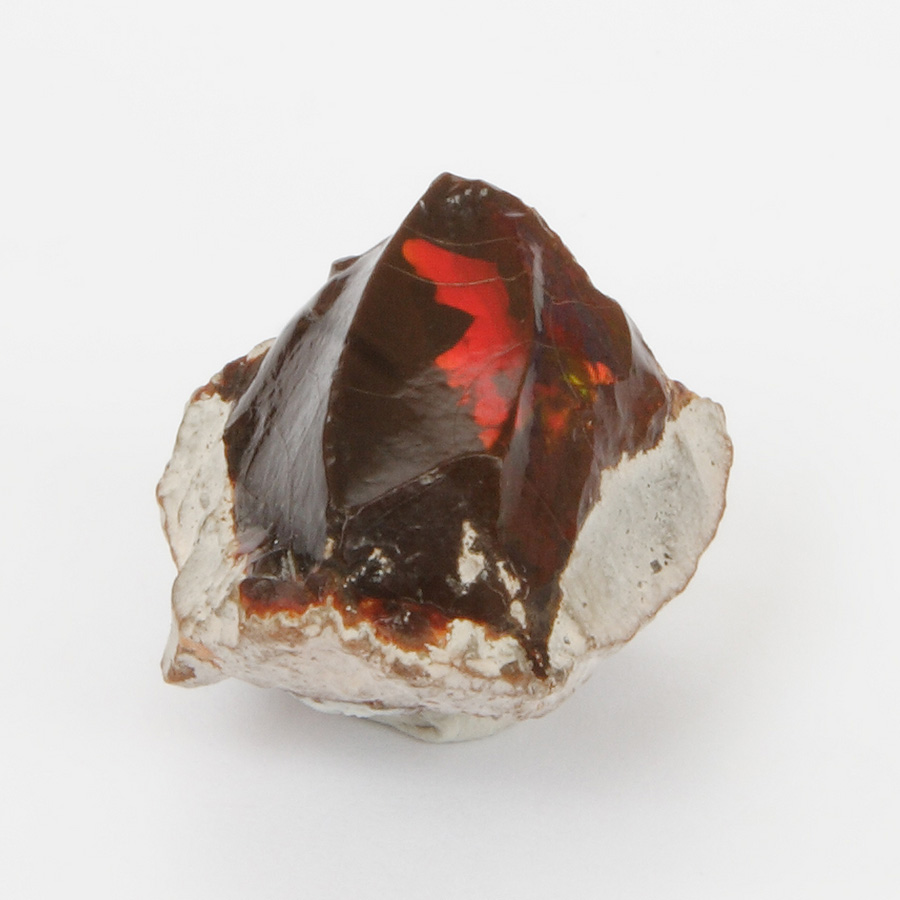
  • Fire (Orange) Opal with or without play of color
  • Opal Cat's Eye
Crystal System / Forms: 
Amorphous. Aggregates, concretions, botryoidal.
Hardness: 
5.5 - 6.5
Specific Gravity: 
1.98 - 2.20
Cleavage / Fracture: 
None / Uneven.
Optic Character: 
Isotropic (S.R.), A.D.R. (S.R.), A.G.G.
Lustre: 
Vitreous.
Refractive Index / Birefringence: 
1.44 - 1.47; Hydrated Opals: can go upto 1.40 / Nil.
Pleochroism: 
None.
Dispersion: 
None.
Magnification: 
Crystalline inclusions (needles of hornblende, quartz and goethite), flow structures, cloud like inclusions, dendritic inclusions (cristobalite).
U.V. Fluorescence: 
In some strong white under shortwave and longwave. Persistent green phosphorescence.
Spectrum: 
Not characteristic.
Cause of Phenomenon: 
  • The play of color is caused by the diffraction of light from the spheres of silica gel in the opal structure. Specific colors are seen depending on the size of the silica gel and their arrangement in the structure.
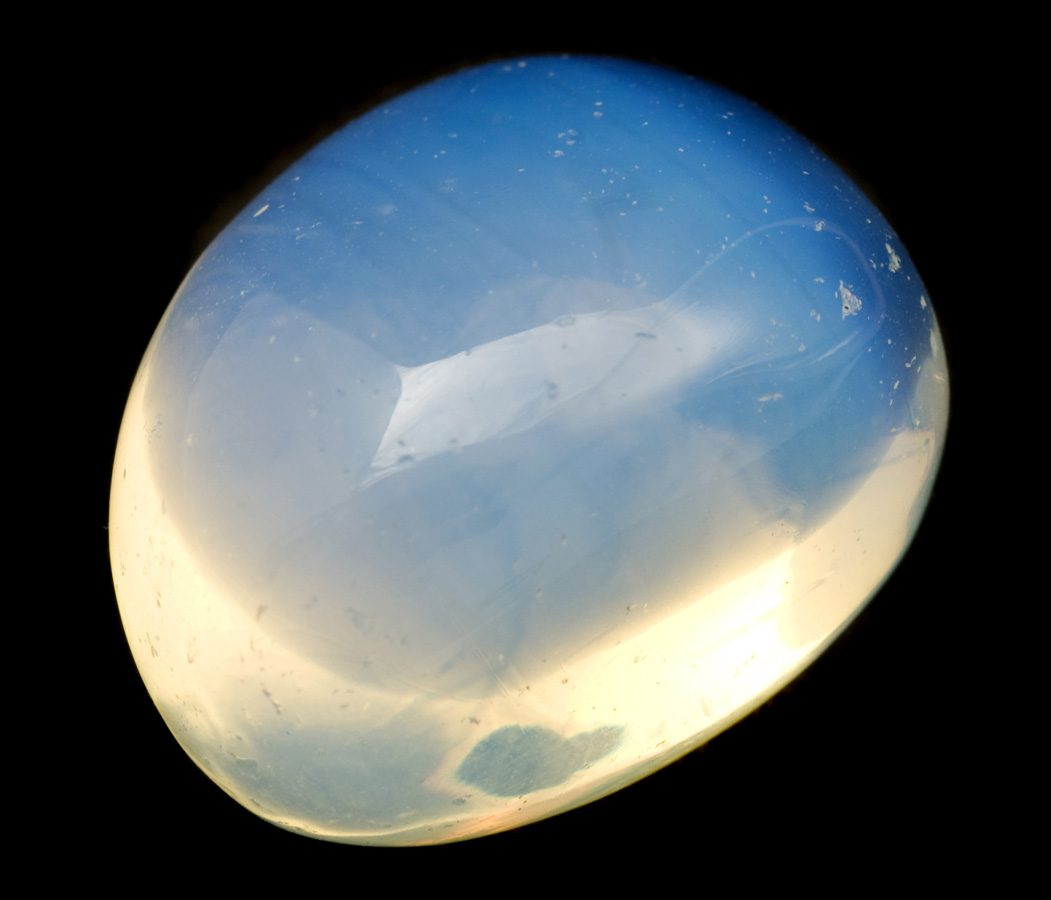
  • Opalescence or the milky effects in white opals are due to scattering of white light by particles within the stone.
  • Opal cat's eye is caused by the presence of parallel fibers of chiastolite (these fibers tend to give a D.R. reaction under the polariscope and an incorrect effect of D.R. for the stone).
Treatment (Enhancement): 
  • Colorless impregnation with oil plastic, polymers prevents crack formation and improves play of color.
  • Colored impregnation (dyeing) to darker shades to improve the play of color effect.
  • Smoke impregnation darkens the body color and in some case may be a surface treatment only. It can be identified by the black cloud like patches, loses its play of color in water which returns as the stone dries and may have lower S.G.'s.
  • Sugar treatment darkens the body color and can be identified by the black spotted pattern like pepper.
Specific Tests & Remarks: 
  • The body tone refers to the relative darkness or lightness of the opal, while ignoring its play of color. Opal with a distinctly colored body e.g. dark yellow, dark blue etc. should be classified as black, dark or light opals while referring to body tone.
  • Opal contains water and any sudden changes in temperature may cause it to crack or fracture.
Synthesis: 
Synthesized by the gel growth process. Identified by mosaic pattern within which a lizard skin / chicken wire pattern is seen, columnar structure seen from the girdle and zoning.

Simulants (with key separation tests): 
  • Gilson created opal or Synthetic Opal (structure, inclusions).
  • Slocum glass (stable color flashes, S.G., inclusions)
  • Opalite is a plastic imitation with play of color (R.I., S.G., inclusions)
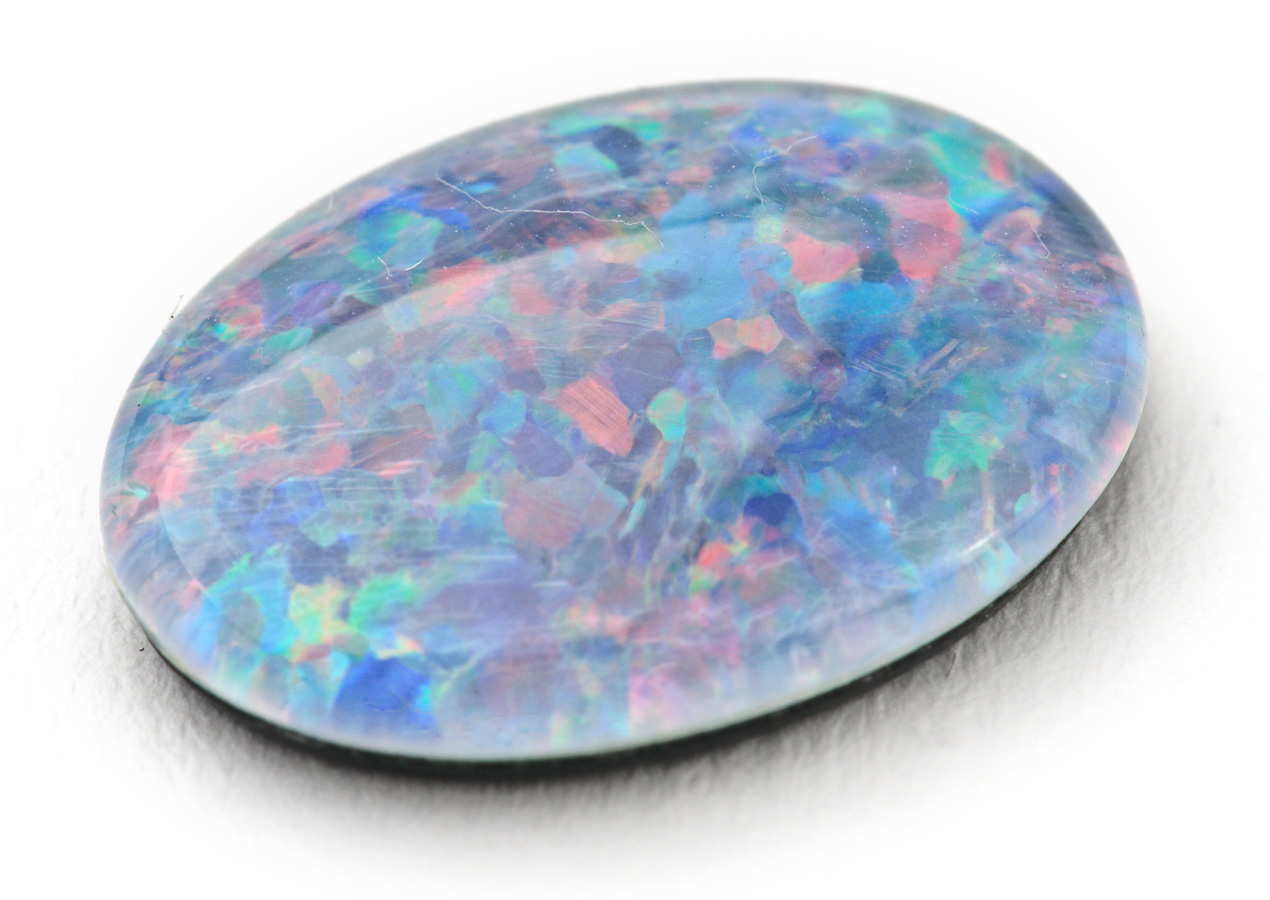
  • Composite (doublet and triplet)
  • Chalcedony (R.I., S.G.)
Geological Occurrence: 
Sedimentary rocks and low temperature solutions bearing silica percolate through rocks.
Sources: 
Australia, Mexico, China, Brazil, U.S.A. (California), Indonesia.
Cuts & Uses: 
Facetted cuts, cabochons, beads, etc.

Did you know?

Jewellery is one of the most bought products online. An estimated $1 billion USD of diamonds are bought annually via the Internet. Over 40 million people use the Internet to trade!

In Germany, the garland of ambers is hung around the necks of the infants, so that their teeth might come out without much trouble.

In Turkey, people fix a piece of amber in the hubble-bubble, dogged by an age old belief that the presence of the jewel would destroy all the germs and no disease would spread, even after many have dragged their puffs from it.

In Greece, people think if wine is poured into the cups made of amethyst, one does not get drunk after drinking that.

In Rome, a talisman having coral pieces is considered very auspicious to quell the bad spells of evil look. The Romans were in the habit of hanging chains made of ancient coral pieces from the cradle of the infants to protect them from evil effects.

In China, people wear rings studded with tiny conch or oyster shells as they believe it cures all aches such as stomach ache, worms and like.

In India, pendants made of silver and studded with pearls are hung from the necks of the children to save them from any bad effects.

Greeks still believe, if women wear blue sapphires then no sense of immorality would pollute their mind nor can any fear of the supernatural can trouble them.

The Pope Innocent III had circulated an order asking all the priests wear blue sapphire, so that morality can be strengthened.

It is said about turquoise, that when the stone changes its color into yellow, it actually signals bad times to the person who wears it.

It is believed that a turquoise gifted to a friend or a lover turns his or her life into one of happiness and good luck.

Poll