Inorganic Gemstones

Nephrite

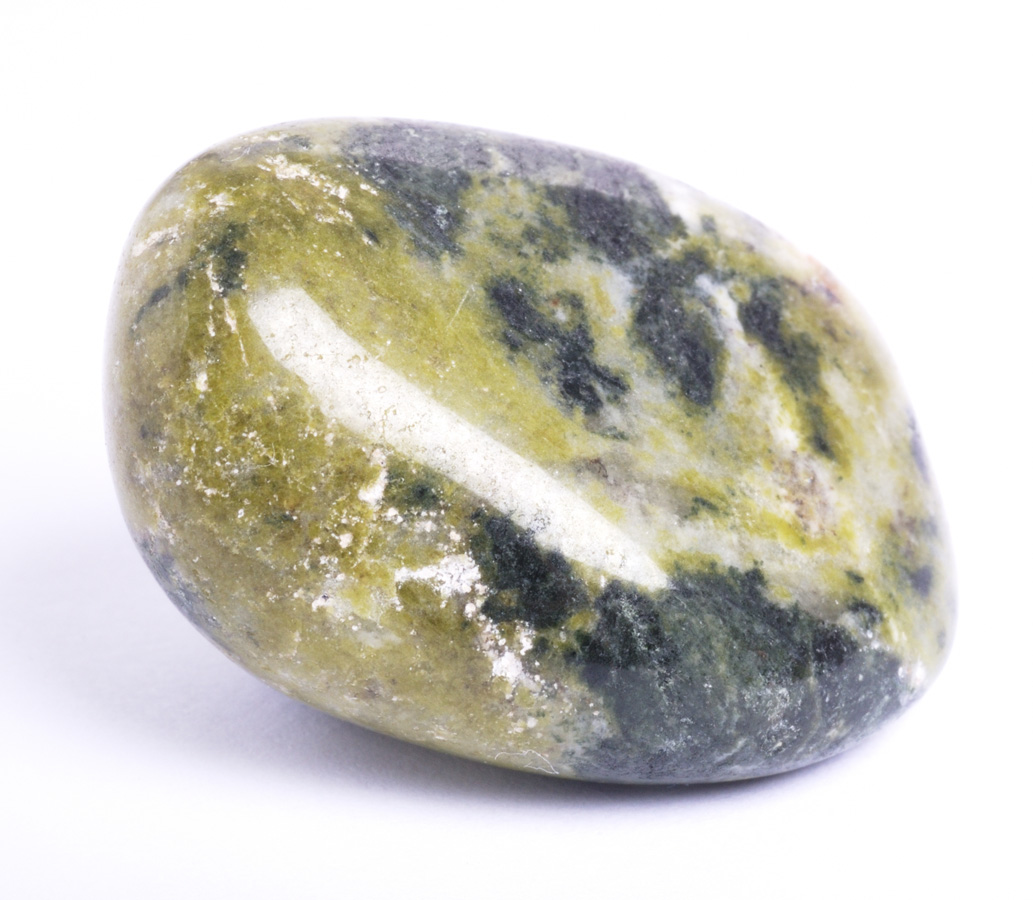
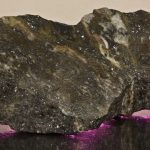
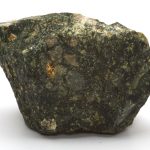
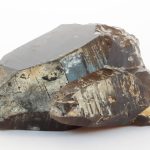
Rough Nephrite from Montauban, Quebec, Canada.

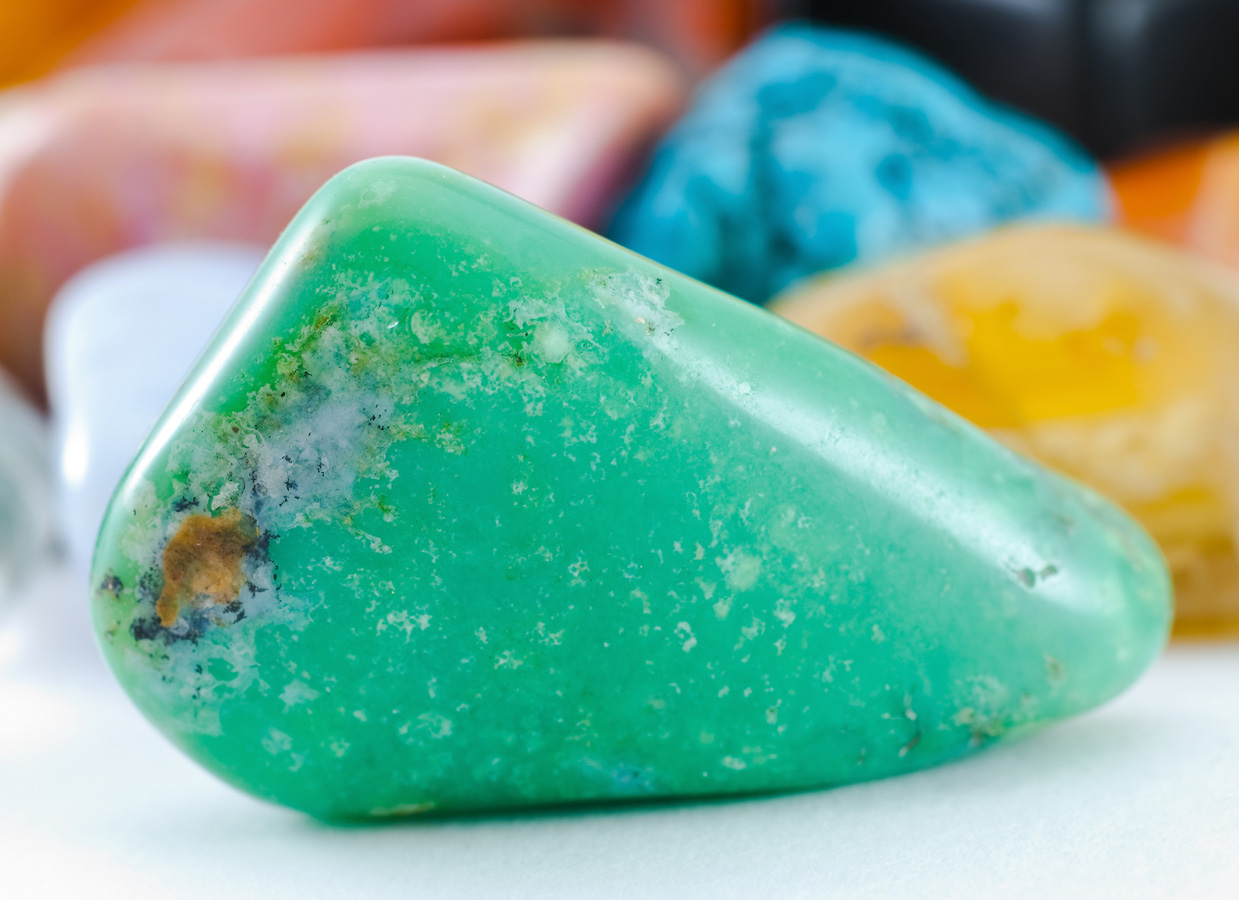
Nephrite, named another kind of jade since 1863, is located as aggregates of fibrous amphibole crystals. These form an interlocking structure tougher than steel, hence nephrite’s popularity like a material for carving - first for weapons and later for ornaments. Colours vary from the green, iron-rich nephrite to some cream-coloured, magnesium-rich variety. Nephrite jade might be homogeneous in colour, blotchy or banded.

Nephrite hade may be carved through the Chinese for more than 2,000 years, even though raw material was probably imported first from Turkestan in Central Asia, and later from Burma. Other localities include Siberia (green boulders, often with black spots), Russia (spinach-coloured stones), and China itself. Nephrite jade can also be present in various rocks within the North and South Islands of recent Zealand (pieces carved within the 17th century include Maori clubs called “meres”). Other localities include Australia (black nephrite), the United States, Canada, Mexico, Brazil, Taiwan, Zimbabwe (green), Italy, Poland, Germany, and Switzerland.

Nephrite may be mistaken with bowenite serpentine, might be imitated by composite stones, or dyed to enhance colour.


Properties
Chemical Composition: 
Calcium Magnesium Silicate + Fe2+, Ca2(Mg,Fe)5(OH)2(Si4O11)2
Classification / Type: 
Belongs to the tremolite - actinolite series of the amphibole group of minerals.
Colors / Varieties: 
Green, yellow-brown, creamy brown (mutton-fat jade), gray, black. Transparency: Translucent to Opaque. Chatoyant variety.
Crystal System / Forms: 
Monoclinic System / Cryptocrystalline, boulders commonly covered with a brown layer due to oxidation of iron content.
Hardness: 
6.5
Specific Gravity: 
2.90 - 3.02
Cleavage / Fracture: 
Not visible / Splintery fracture.
Optic Character: 
Anisotropic, D.R.; Aggregate (A.G.G.)
Lustre: 
Vitreous to greasy.
Refractive Index / Birefringence: 
1.606 - 1.632 (Spot R.I.: 1.610) / 0.026
Pleochroism: 
None.
Dispersion: 
-
Magnification: 
Brownish veins seen due to oxidation of iron content, black crystal inclusions.
U.V. Fluorescence: 
Inert.
Spectrum: 
In general not characteristic, but may show weak lines at 460nm, 498nm, 509nm, 690nm.
Cause of Color: 
  • More iron content - deeper green.
  • More magnesium content - creamy brown.
  • Chatoyancy is due to the presence of parallel fibers.
Specific Tests & Remarks: 
Consists of an interlocking mass of fibrous crystals making it one of the toughest minerals (but not the hardest mineral), more than jadeite.
Synthesis: 
-
Simulants (with key separation tests): 
Jadeite (R.I., S.G., structure, spectrum), Serpentine (R.I., S.G., lustre, hardness), Idocrase (R.I., spectrum, structure), Hydrogrossular Garnet (R.I., S.G.), Prehnite (R.I., birefringence, structure), Aventurine Quartz (R.I., S.G., structure, spectrum), Maw-sit-sit (color, structure).
Geological Occurrence: 
Alluvial boulders.
Sources: 
Russia, China, New Zealand, Australia, Canada, Poland, U.S.A. (Alaska, Wyoming), Brazil, etc.
Cuts & Uses: 
Cabochons, beads, carvings, etc.

Did you know?

Jewellery is one of the most bought products online. An estimated $1 billion USD of diamonds are bought annually via the Internet. Over 40 million people use the Internet to trade!

In Germany, the garland of ambers is hung around the necks of the infants, so that their teeth might come out without much trouble.

In Turkey, people fix a piece of amber in the hubble-bubble, dogged by an age old belief that the presence of the jewel would destroy all the germs and no disease would spread, even after many have dragged their puffs from it.

In Greece, people think if wine is poured into the cups made of amethyst, one does not get drunk after drinking that.

In Rome, a talisman having coral pieces is considered very auspicious to quell the bad spells of evil look. The Romans were in the habit of hanging chains made of ancient coral pieces from the cradle of the infants to protect them from evil effects.

In China, people wear rings studded with tiny conch or oyster shells as they believe it cures all aches such as stomach ache, worms and like.

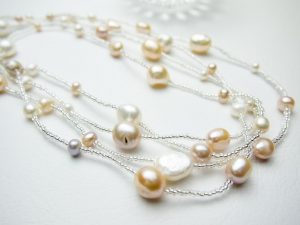
In India, pendants made of silver and studded with pearls are hung from the necks of the children to save them from any bad effects.

Greeks still believe, if women wear blue sapphires then no sense of immorality would pollute their mind nor can any fear of the supernatural can trouble them.

The Pope Innocent III had circulated an order asking all the priests wear blue sapphire, so that morality can be strengthened.

It is said about turquoise, that when the stone changes its color into yellow, it actually signals bad times to the person who wears it.

It is believed that a turquoise gifted to a friend or a lover turns his or her life into one of happiness and good luck.

Poll