Inorganic Gemstones

Chrysoberyl

Chrysoberyl Cat's Eye

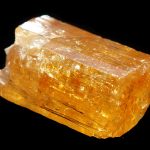
Chrysoberyl occurs in a variety of colours, from green, greenish yellow, and yellow to brown. It's a hard, durable stone, particularly suitable to be used in jewellery. When cut well, gems are brilliant but lack fire. Two varieties, alexandrite and cat’s-eye, have unique qualities that belongs to them. The rare and valuable alexandrite changes from green in daylight to red, mauve, or brown under incandescent light, like a lamp. Synthetic chrysoberyl, synthetic corundum, and synthetic spinel have been produced to mimic alexandrite’s colour change.

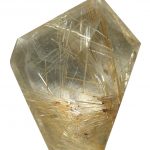
Cat’s-eye, when cut “en cabochon”, includes a near-white line across a yellowish grey stone, because of canal or feather-like fluid inclusions, or needle-like inclusions of rutile. Probably the most highly prized cat’s-eye colour is an easy golden brown, often having a shadow that provides an easy and dark, “milk and honey” effect. Pale yellow chrysoberyl, popular in 18th and 1800s Portuguese jewellery, was also called chrysolite.

Although mainly exercised, the very best chrysoberyl, including alexandrite, has been discovered in mica schists within the Urals (Russia). The biggest faceted chrysoberyl from Russia weighs 66 carats. Large waterworn pebbles of numerous colours are simply within the gem in Burma, Brazil, Zimbabwe, Tanzania and Madagascar. Cat’s eye can be found in Sri Lanka, Brazil and China.

The name is in the Greek “chrysos”, meaning golden and “beryllos” which refers towards the beryllium content. Known for centuries in Asia, it had been highly valued for that protection it afforded in the “evil eye”.

Properties
Chemical Composition: 
Beryllium Aluminium Oxide - BeAl2O4
Classification / Type: 
-
Colors / Varieties: 
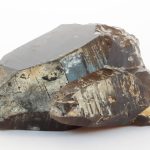
  • Chrysoberyl: Transparent green, yellow, brown
  • Chrysoberyl Cat's Eye: Yellow / green / brown
  • Alexandrite (color change in lamplight and daylight)
  • Alexandrite Cat's Eye
Crystal System / Forms: 
Orthorhombic System / Found as prismatic crystals usually flattened parallel to the macro - pinacoidal faces. Also as interpenetrant and cyclic twins (Trilling - forms produced by triple twinning as is seen in the pseudo-hexagonal cyclic twin).
Hardness: 
8.5
Specific Gravity: 
3.71 - 3.75
Cleavage / Fracture: 
Imperfect / Conchoidal fracture
Optic Character: 
Anisotropic, D.R.; Biaxial positive.
Lustre: 
Vitreous
Refractive Index / Birefringence: 
1.746 - 1.755 / 0.009; Range: 1.740 - 1.760
Pleochroism: 
Weak trichroism
Dispersion: 
0.015
Magnification: 
Phase and fingerprints, crystalline inclusions, growth zoning - trilling boundaries.
U.V. Fluorescence: 
Inert
Spectrum: 
  • Yellow / Brown / Green Varieties: Strong band at 444nm.
Cause of Color: 
Yellow, green, brown: Iron
Treatment (Enhancement): 
Lighter yellow, included cat's eye irradiated to a more transparent deep brown color. Most of these were found to be radioactive.
Specific Tests & Remarks: 
-
Synthesis: 
Czochralski and Flux fusion method.
  • Synthetic Chrysoberyl Cat's Eye
Simulants (with key separation tests): 
  • Quartz (R.I., S.G., lustre), Apatite (R.I., S.G., lustre, inclusions), Sillimanite (R.I., S.G., spectrum), Glass (inclusions)
Geological Occurrence: 
In pegmatite, schist, marbles and alluvial deposits.
Sources: 
Sri Lanka, India, Brazil, Madagascar.
Cuts & Uses: 
Facetted cuts, cabochon, generally mixed cuts, also as beads, carvings, etc.

Click on this link for meaning of chrysobery gemstone.

Did you know?

Jewellery is one of the most bought products online. An estimated $1 billion USD of diamonds are bought annually via the Internet. Over 40 million people use the Internet to trade!

In Germany, the garland of ambers is hung around the necks of the infants, so that their teeth might come out without much trouble.

In Turkey, people fix a piece of amber in the hubble-bubble, dogged by an age old belief that the presence of the jewel would destroy all the germs and no disease would spread, even after many have dragged their puffs from it.

In Greece, people think if wine is poured into the cups made of amethyst, one does not get drunk after drinking that.

In Rome, a talisman having coral pieces is considered very auspicious to quell the bad spells of evil look. The Romans were in the habit of hanging chains made of ancient coral pieces from the cradle of the infants to protect them from evil effects.

In China, people wear rings studded with tiny conch or oyster shells as they believe it cures all aches such as stomach ache, worms and like.

In India, pendants made of silver and studded with pearls are hung from the necks of the children to save them from any bad effects.

Greeks still believe, if women wear blue sapphires then no sense of immorality would pollute their mind nor can any fear of the supernatural can trouble them.

The Pope Innocent III had circulated an order asking all the priests wear blue sapphire, so that morality can be strengthened.

It is said about turquoise, that when the stone changes its color into yellow, it actually signals bad times to the person who wears it.

It is believed that a turquoise gifted to a friend or a lover turns his or her life into one of happiness and good luck.

Poll