Inorganic Gemstones

How to judge if the stone is a color changing gemstone?

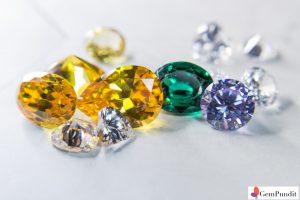
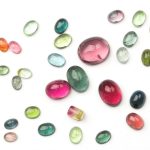
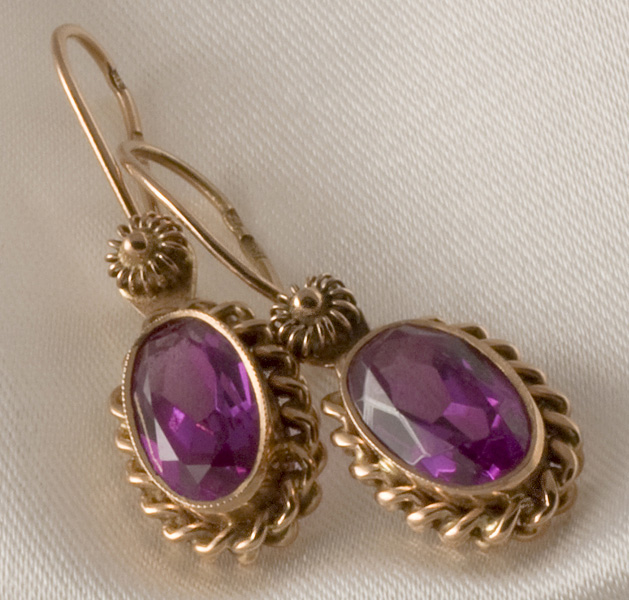
Alexandrite, sapphire, garnet, tourmaline, spinel, synthetic sapphire, glass etc. are some of the gemstones which display a change of color from daylight to lamplight.

To judge whether a stone is a color changing gemstone or not, one has to consider following things:

  • First and foremost, always keep the light source constant such as the daylight, non-fluorescent tube and a lamp.
  • The distance of the stone from the light source must be constant for both sources.
  • The stone to be examined must be kept on a white background with the table facet towards the light source and observed with light reflected off it.
  • If and only if there is a perceptible change of color from on source to the other, the stone can be considered as a color changing stone.
  • The percentage of change however can only be an approximate idea of whether it is 50% or 75% or 100% unless predetermined with a master graded set.
  • This factor is the deciding factor for calculation the price.
  • The most important factor is that the stone is observed in reflected light and not transmitted light.
  • Some stones are so strongly pleochroic (some have a secondary reddish / brownish tint), that in lamplight the color change is magnified and enhanced and the stone appears to have a strong color change when in actual fact it is only slightly enhanced.
  • Colored inclusions such as orange-brown staining in fractures also tent to enhance the color of the stone.

These are some of the points that one should consider while examining a color changing gemstone, but it is always recommended to take the help of gemological instruments and lab.

Post new comment

The content of this field is kept private and will not be shown publicly.
  • Lines and paragraphs break automatically.
  • Allowed HTML tags: <p> <br> <em> <b> <strong> <cite> <code> <acronym> <ul> <ol> <li> <dl> <dt> <dd> <table> <tr> <td> <sub> <sup>

More information about formatting options

Did you know?

Jewellery is one of the most bought products online. An estimated $1 billion USD of diamonds are bought annually via the Internet. Over 40 million people use the Internet to trade!

In Germany, the garland of ambers is hung around the necks of the infants, so that their teeth might come out without much trouble.

In Turkey, people fix a piece of amber in the hubble-bubble, dogged by an age old belief that the presence of the jewel would destroy all the germs and no disease would spread, even after many have dragged their puffs from it.

In Greece, people think if wine is poured into the cups made of amethyst, one does not get drunk after drinking that.

In Rome, a talisman having coral pieces is considered very auspicious to quell the bad spells of evil look. The Romans were in the habit of hanging chains made of ancient coral pieces from the cradle of the infants to protect them from evil effects.

In China, people wear rings studded with tiny conch or oyster shells as they believe it cures all aches such as stomach ache, worms and like.

In India, pendants made of silver and studded with pearls are hung from the necks of the children to save them from any bad effects.

Greeks still believe, if women wear blue sapphires then no sense of immorality would pollute their mind nor can any fear of the supernatural can trouble them.

The Pope Innocent III had circulated an order asking all the priests wear blue sapphire, so that morality can be strengthened.

It is said about turquoise, that when the stone changes its color into yellow, it actually signals bad times to the person who wears it.

It is believed that a turquoise gifted to a friend or a lover turns his or her life into one of happiness and good luck.

Poll