
It consists of a cleaved rhomb of optical quality calcite (Iceland spar), which is mounted in a tube having an eye piece at one end and a square aperture at the other. A glass prism is cemented to each end of the calcite rhomb to allow the light to enter and leave the calcite rhomb in a straight line. The gemstone under test is positioned so that white light passes through the stone and enters the dichroscope aperture.
Uses of dichroscope:
- To detect pleochroism i.e. dichroism or trichroism.
- To locate the optic axis direction.
In order to detect pleochroism, the stone must be:
- Coloured
- Doubly refractive
- Transparent to semi-transparent
- A single crystal (not an aggregate)
- Observed only in white light.
Procedure:
- Place the dichroscope 1/4 inches away from your eye, holding the stone near the instrument.
- The stone should be away from the light source which transmits strong diffused white light.
- The stone should be viewed in at least 3 different directions.
- Once pleochroic colours are detected, rotate the dichroscope for confirmation. The colours should switch sides upon rotation of 90°.
- The presence of two colours or two shades of the same colour proves the stone is D.R. but not whether it is uniaxial or biaxial.
- If three colours are seen, the stone is biaxial but, if you are unsure of the results, then this test should be disregarded to prove uniaxial or biaxial.
Precautions:
- White light should be used to examine the stone.
- Analyse the stone in different directions so as to avoid making mistakes in the optic direction.
- Highly included or fractured and composite stones can exhibit any reaction i.e. it may exhibit an S.R. or D.R. reaction.
Pleochroism
A beam of light emerging from a doubly refracting transparent stone generally consists of two polarised rays vibrating in planes at right angles to each other.
- If these two rays are emerging through a coloured stone, they may undergo a different degree of colour absorption during their passage through the stone, and hence will be differently coloured.
- This phenomenon is known as pleochroism. It is distinguished as dichroism if two principal colours are seen when observed from two different directions and as trichroism if three principal colours are observed.
- Dichroism is shown by uniaxial minerals and trichroism by biaxial minerals.
- Pleochroism is shown only by doubly refractive coloured stones; but some doubly refractive stones may not show pleochroism even when coloured.
- The strength of pleochroism is not related to the strength of double refraction. For example zircon has a strong D.R. but is practically non – pleochroic whereas apatite, aquamarine and iolite are markedly dichroic but do not have strong D.R.
- The strength of pleochroism is dependent on the depth of colour in the stone and can vary even in the same species, e.g.:
- Ruby – two shades of red.
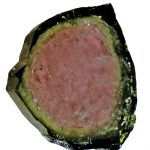
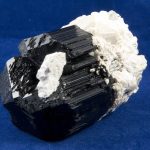
- Tourmaline – two shades of body colour.
- Iolite – pale brownish yellow, pale blue, deep violet blue.
- Andalusite – green, brownish yellow, red.
- The instrument used to detect pleochroism is the dichroscope.






Leave a Reply
You must be logged in to post a comment.